South Korea & Japan
Busan – Jeju Island – Nami Island – Seoul – Okinawa
Tour 01: 17 Apr – 29 Apr 2027 From: $4,695 $4,595 + Airline Taxes
Tour 02: 12 Jun – 24 Jun 2027 From: $5,195 $5,095 + Airline Taxes
Tour 03: 09 Oct – 21 Oct 2027 From: $4,695 $4,595 + Airline Taxes
Inclusive of Roundtrip airfares from LAX or SFO
Special Offer expires before 31 Oct 2026.
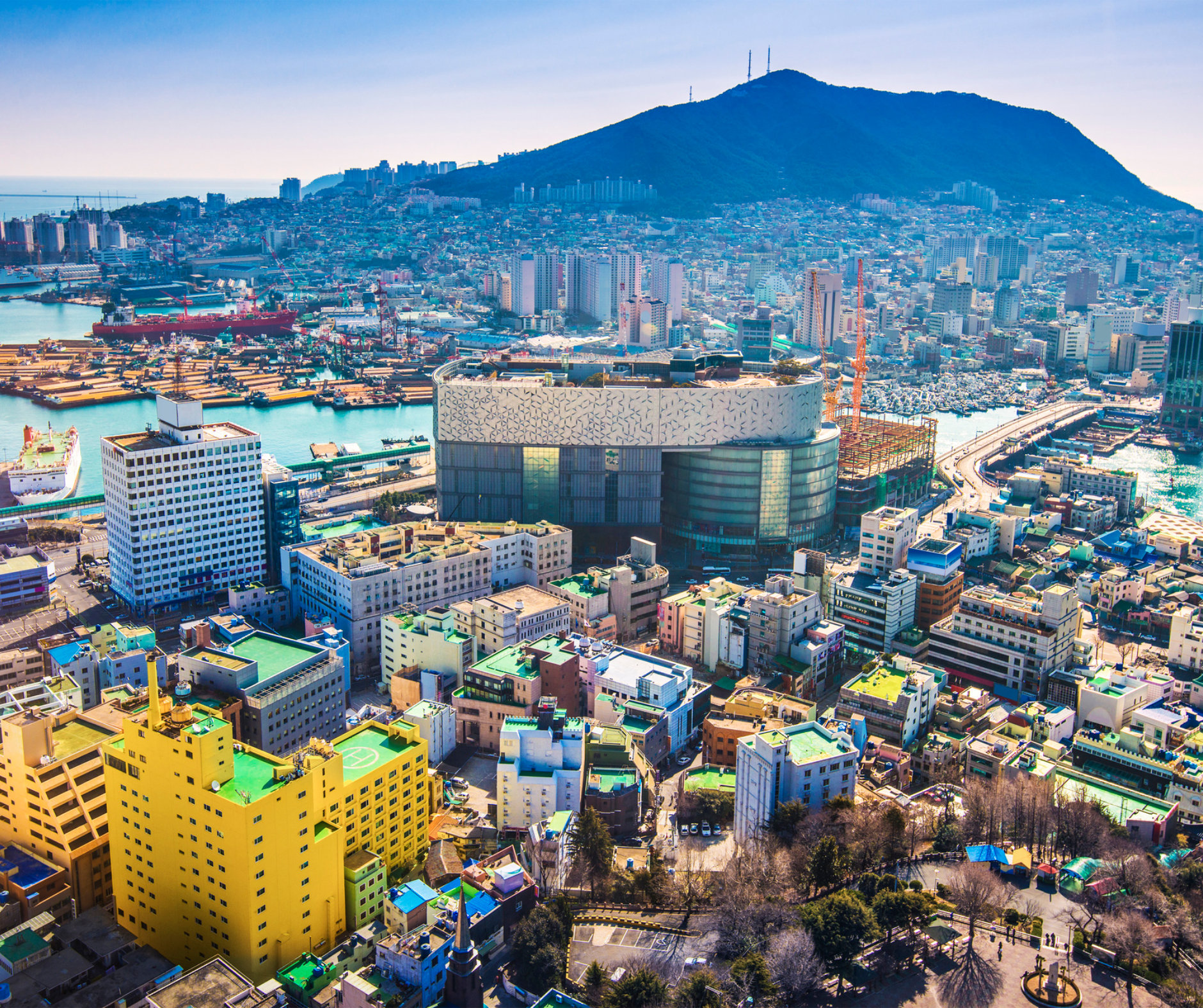
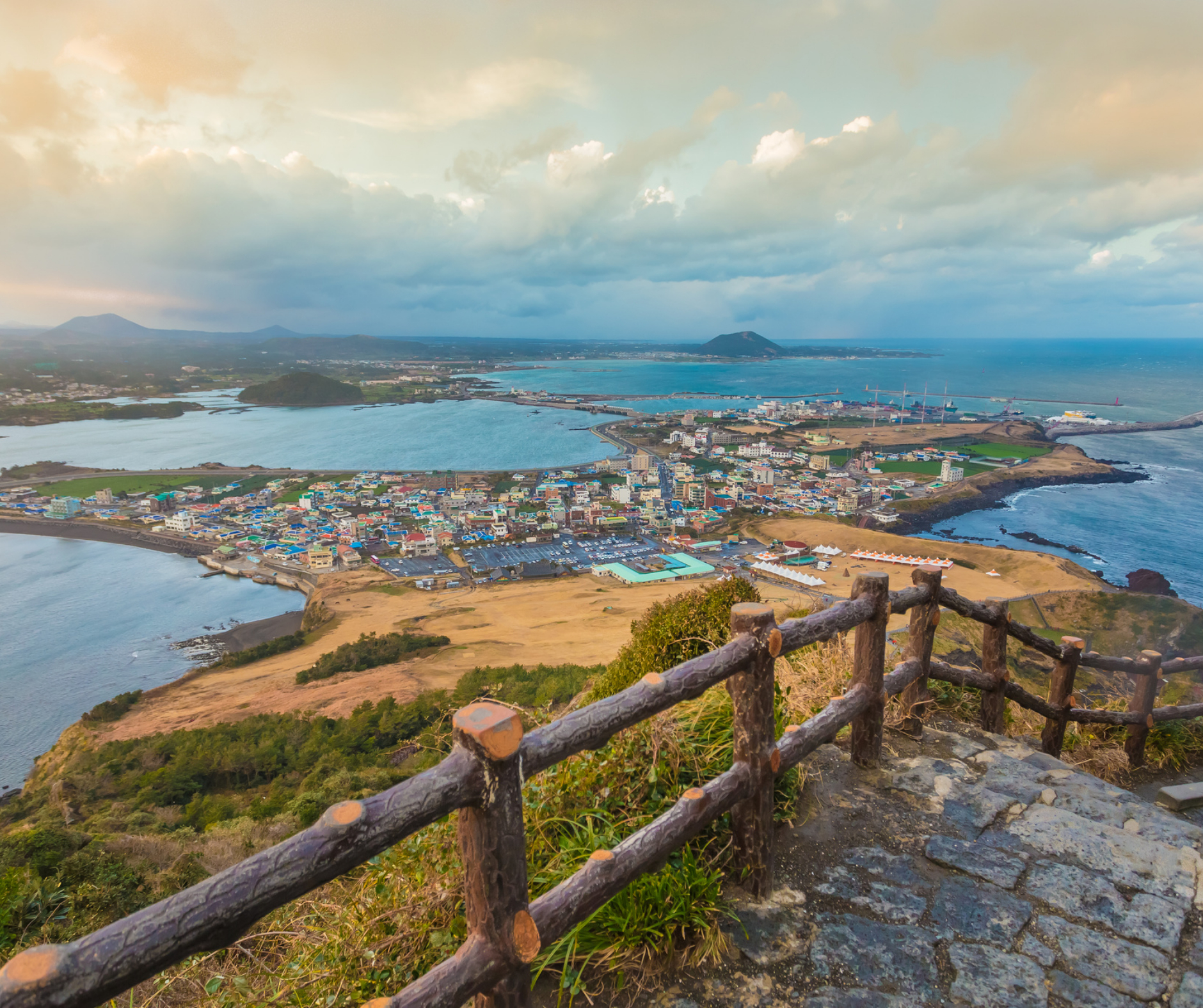
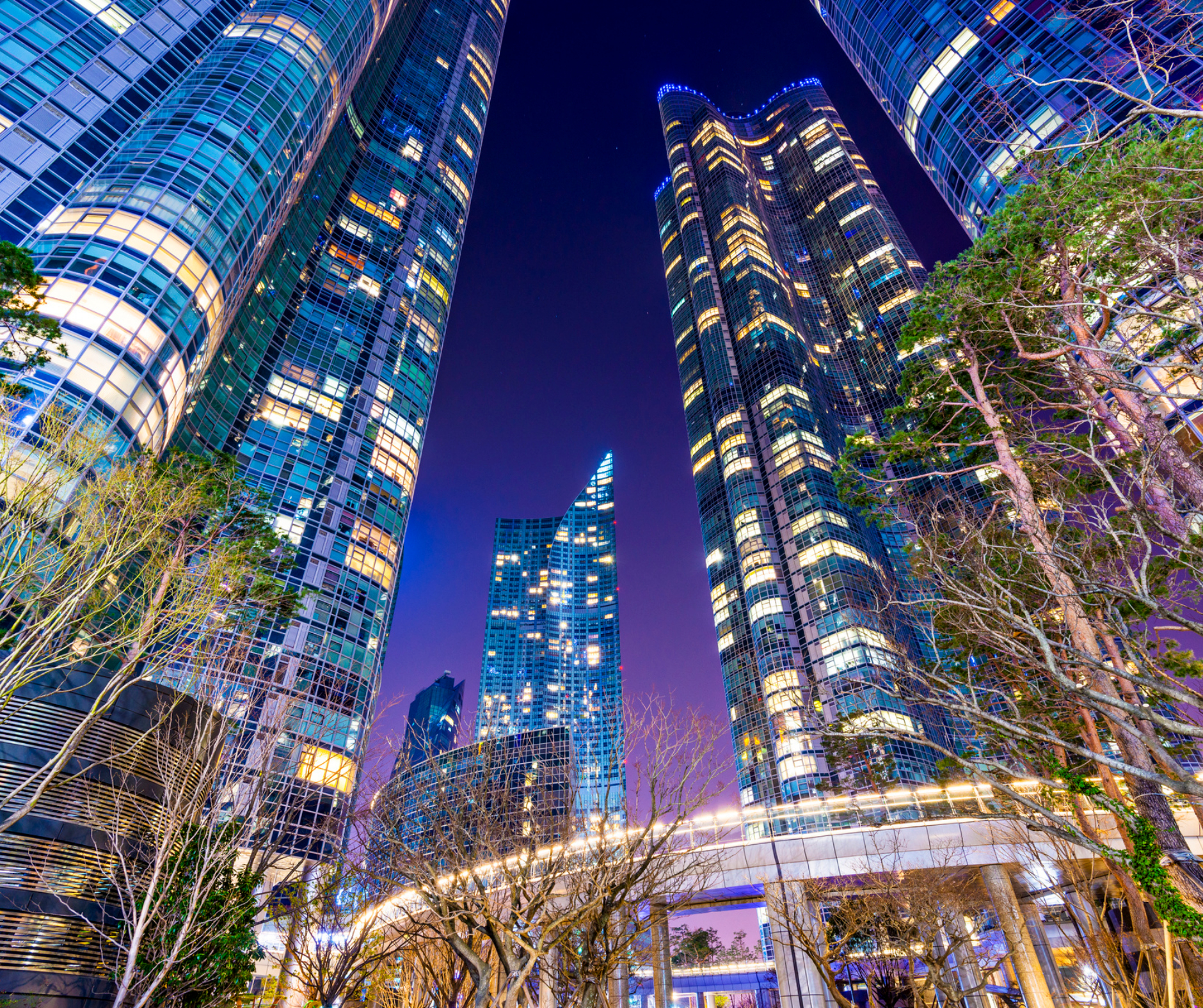
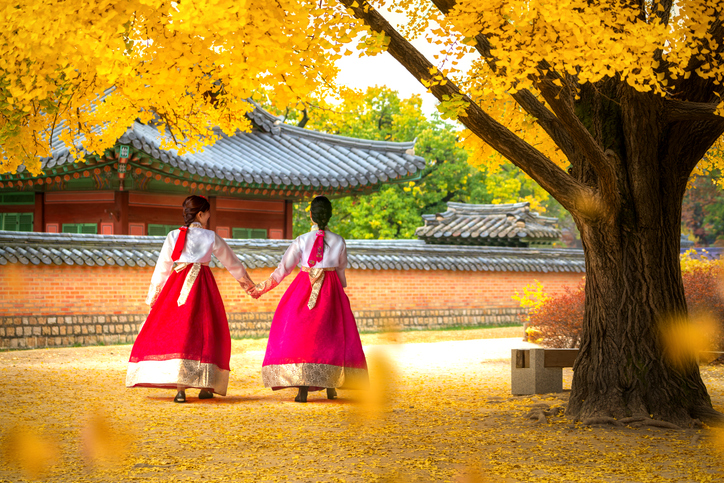
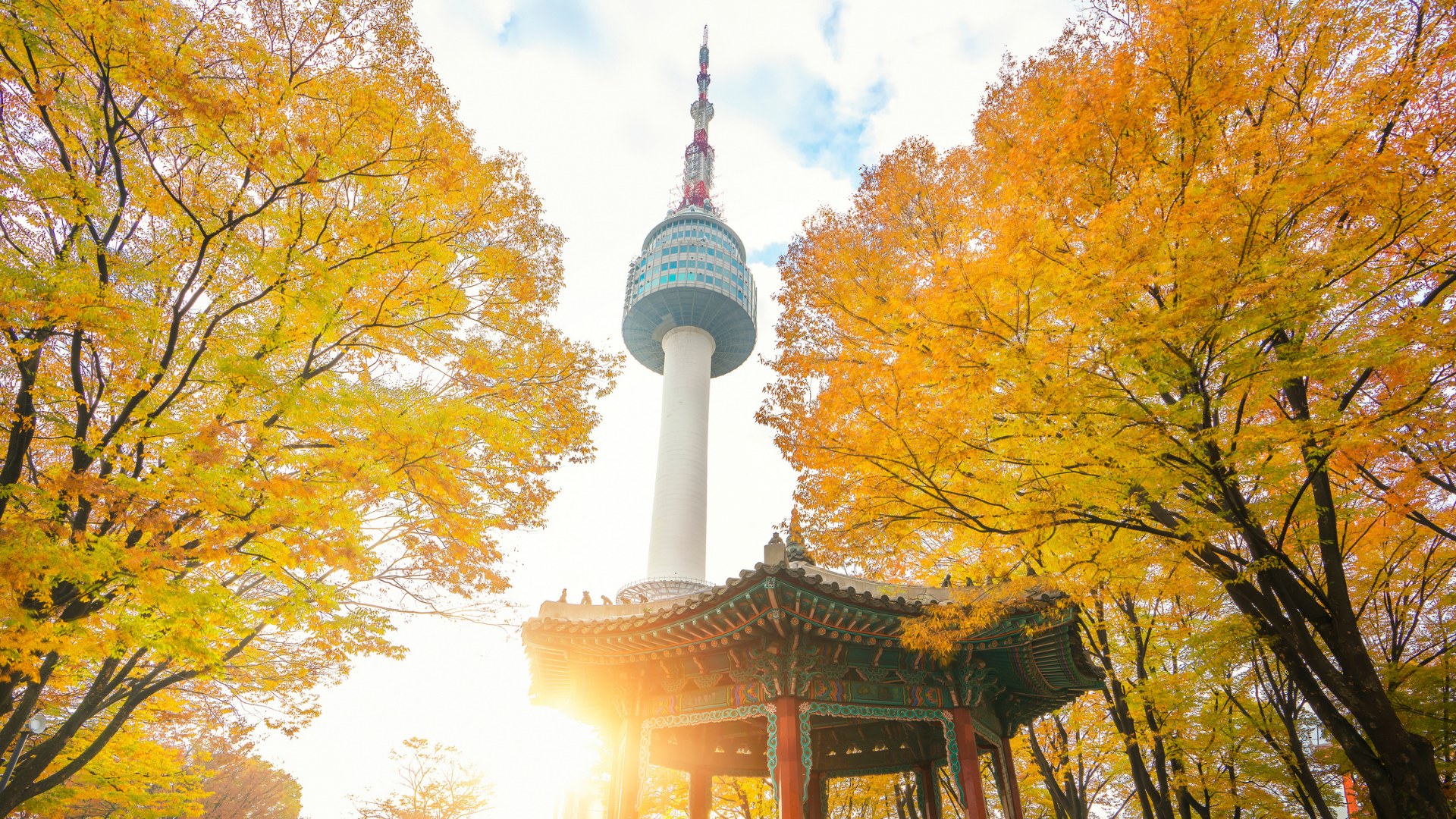
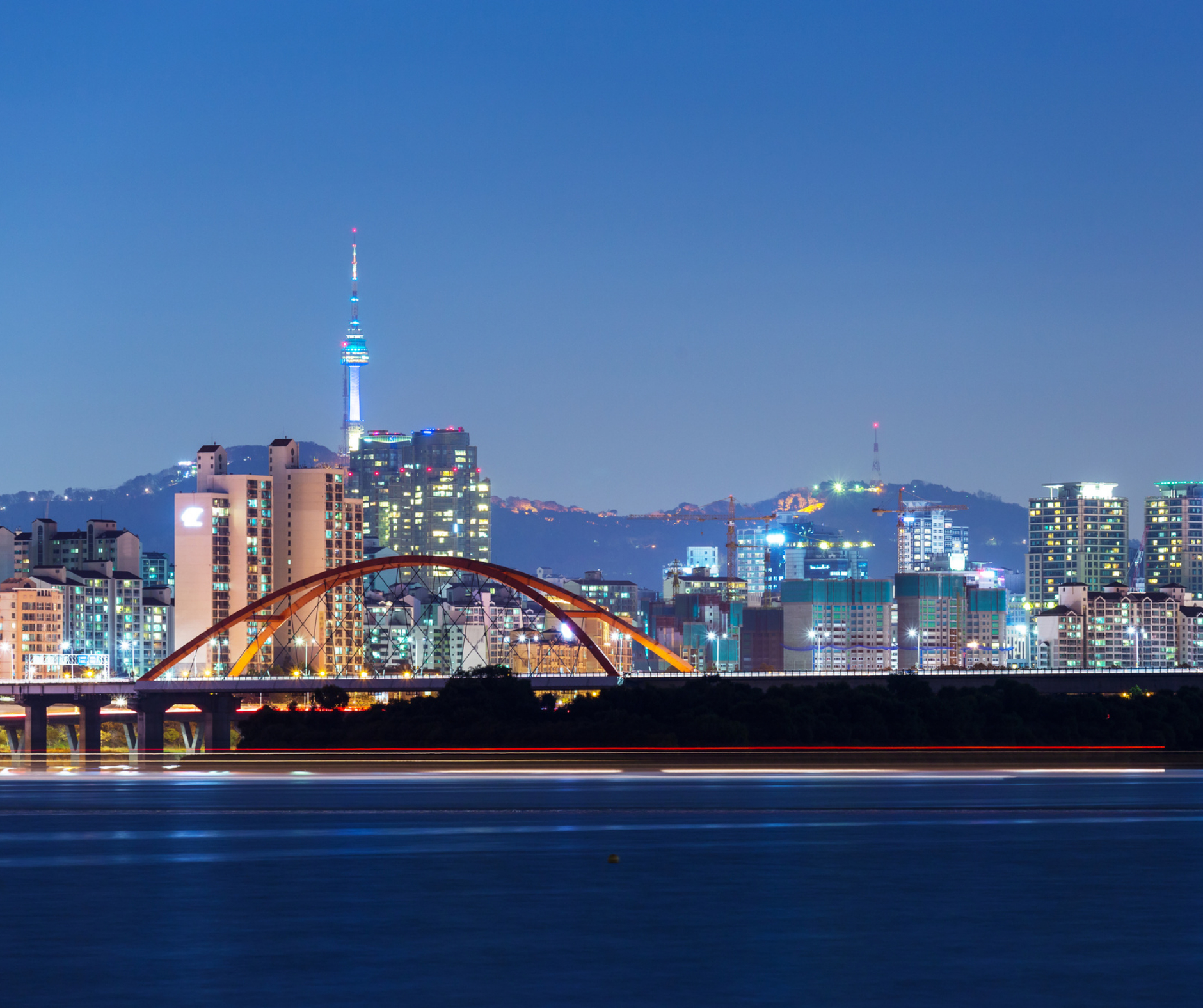
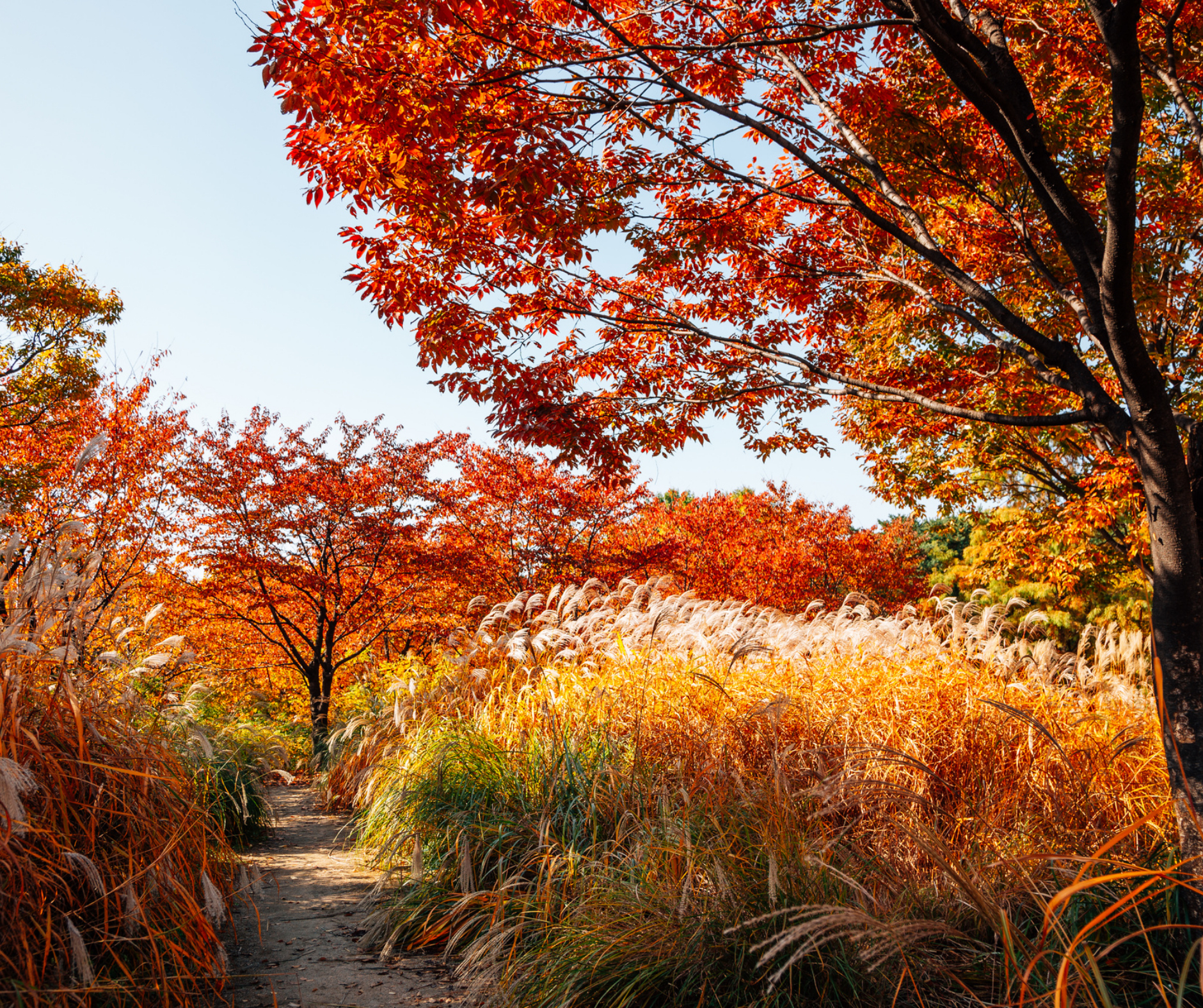
Busan offers a vibrant, fast-paced city-by-the-beach experience with incredible street food and culture, while Jeju Island provides a slower, scenic nature escape famed for volcanic landscapes and an exciting vacation time.
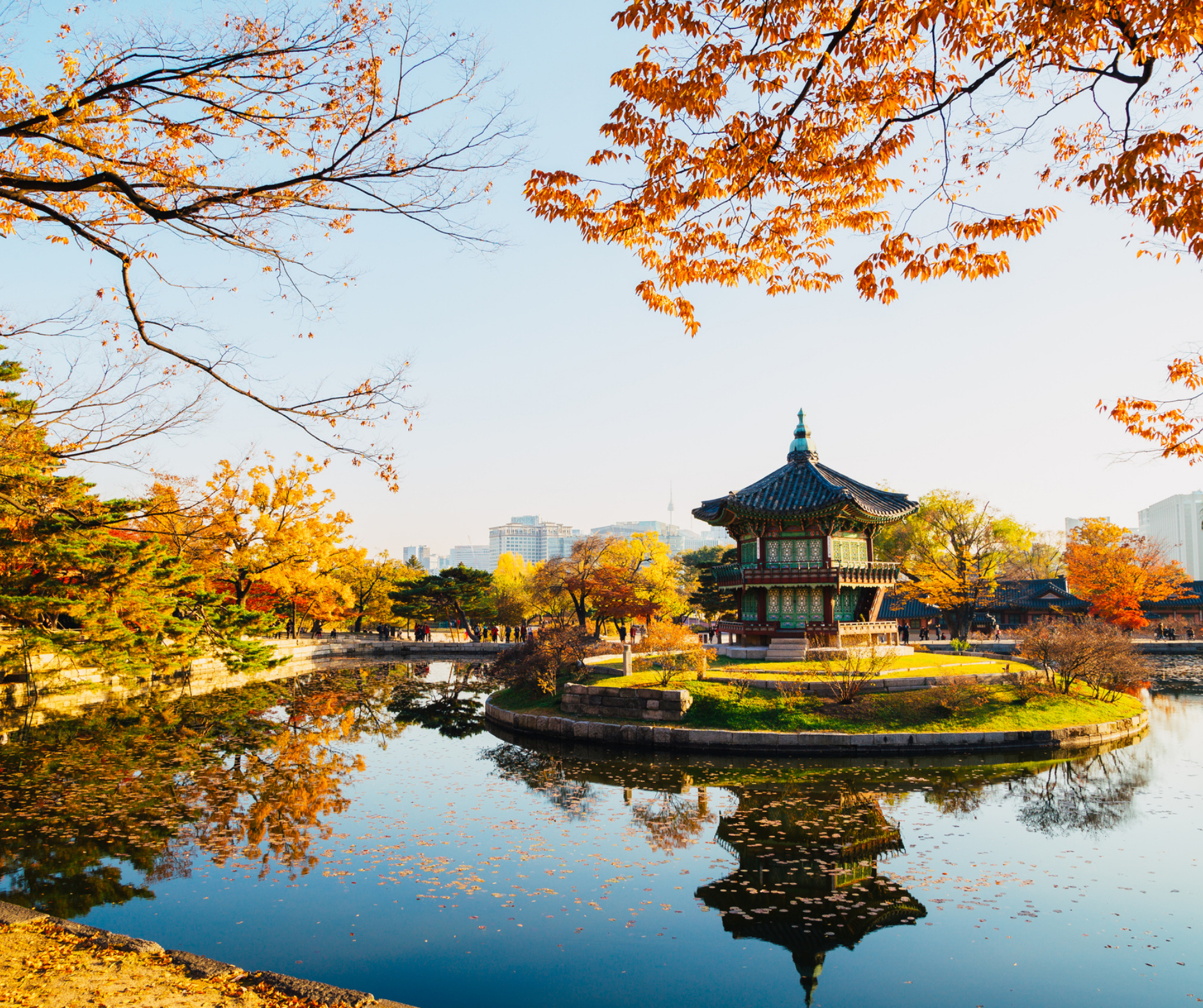
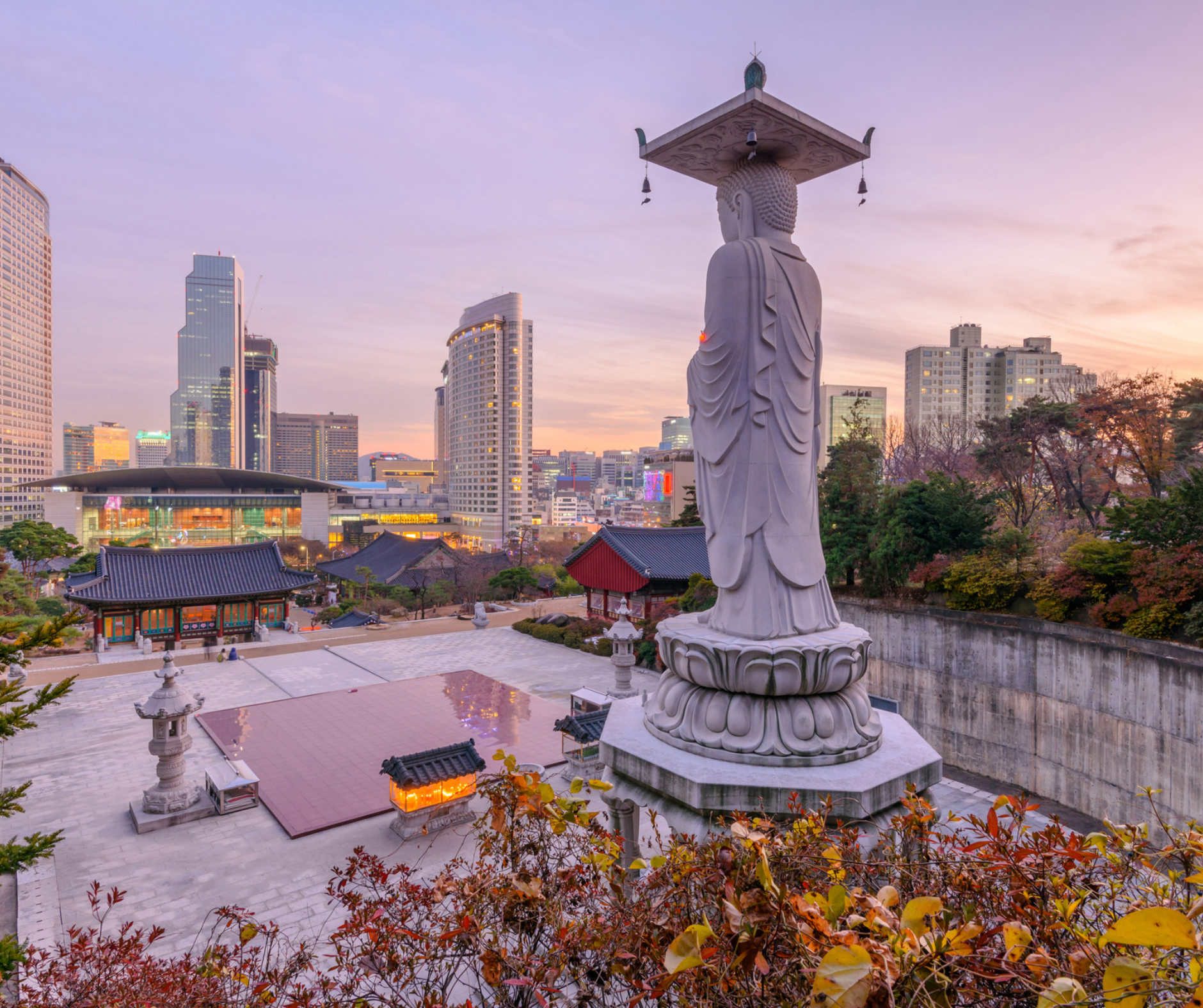
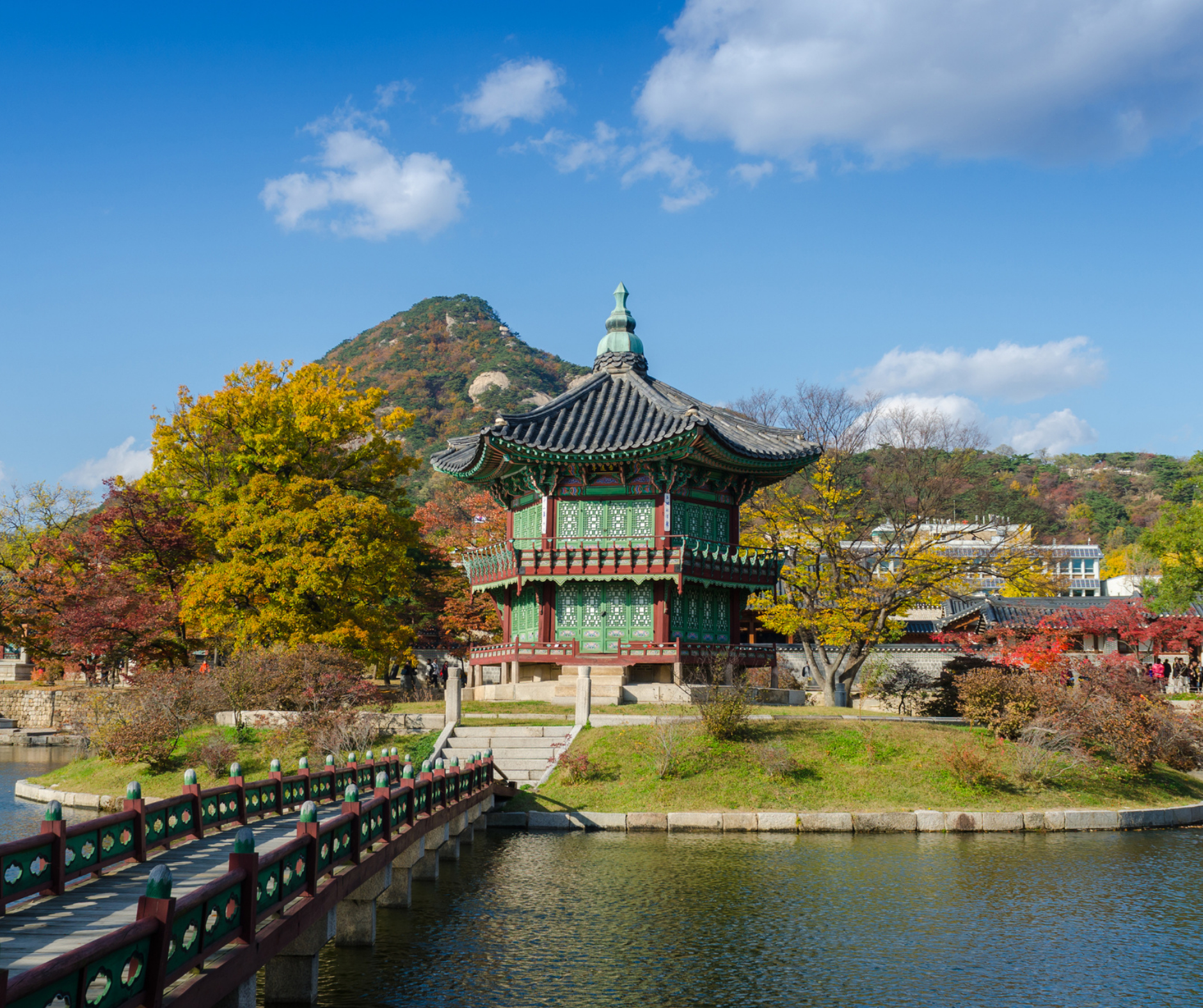
Seoul is a modern city mixed with traditional Korean styles. You’ll see ancient palaces literally next to skyscrapers. It’s pretty cool walking through Gyeongbokgung Palace, and then five minutes later, you’re in a super modern shopping district.
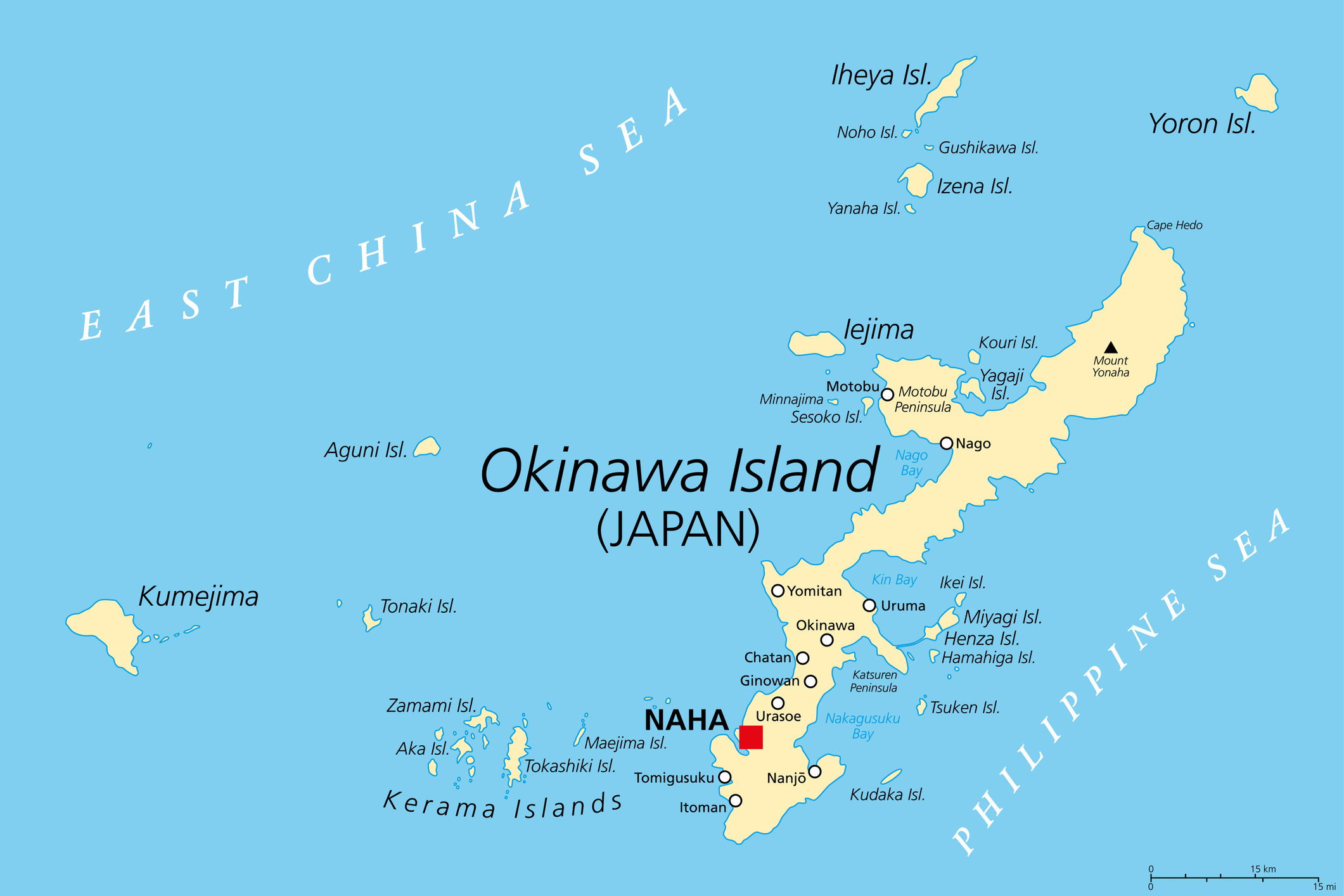
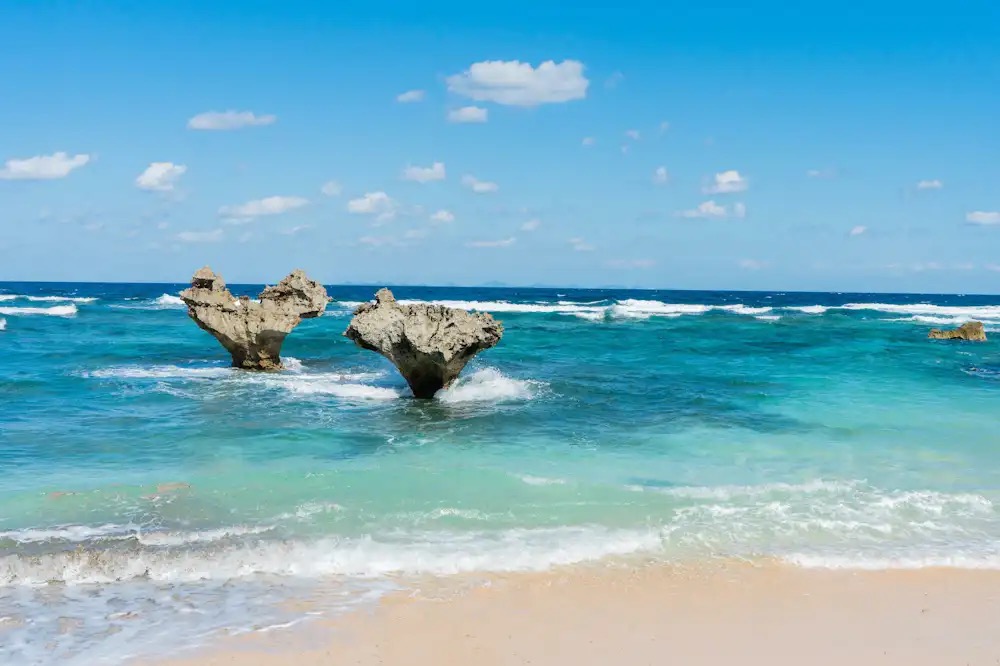
Okinawa offers a stark, sun-soaked contrast to mainland Japan, famous for its world-class white-sand beaches, crystal-clear diving, and distinctive Ryukyuan culture.
Busan. A maritime city with blue seas, Busan has more than 100 lighthouses. Lighthouses with unique shapes and fascinating stories are among the most popular tourist attractions. Aside from guiding ships safely into ports, these lighthouses also provide interesting sights for tourists, enhancing the attraction of tourist destinations. Enjoy the beautiful coastal scenery of the beautiful East Busan. With the cable car traveling in the middle of the sea, can enjoy the panoramic view of Songdo beach, Namhangdaegyo bridge, Songdo Coastal Dullegil road and rock cliffs. Enjoy your nighttime at your hotel with the location is fantastic, with easy access to Haeundae Beach, restaurants, and local attractions.
Your journey starts with a visit Gamcheon Culture Village: Formed by houses built in staircase-fashion on the foothills of a coastal mountain, this village is crowned the nickname “Machu Picchu of Busan.” Visit Haedong Yonggungsa Temple: First built in 1376, the attraction offers visitors the rare find of a temple along the Busan shoreline, which is unlike those commonly found in the mountains. The main sanctuary of the temple was reconstructed in 1970 with careful attention paid to the colors that were traditionally used in such structures. In the afternoon, spanning 4.8 kilometers, Haeundae Blue Line extends from Haeundae Mipo, passes through Cheongsapo, and ends at Songjeong. It features a makeover of an old railway track that now serves as a tourist coastal train route. Take the unique sky capsules above the ground to enjoy an elevated view. Enjoy your time at Haeundae Beach is the most famous in Busan with white sand.
After concluding your gourmet breakfast, depart to visit Gyeongju is known as “the museum without walls” because of the vast number of cultural properties and archaeological sites of the city. The city’s name “Gyeongju” was established in around 935AD by King Taejo, meaning Congratulatory district”. Established in the 8th century on the slopes of Mount Toham, the Seokguram Grotto contains a monumental statue of the Buddha looking at the sea in the bhumisparsha mudra position. With the surrounding portrayals of gods, Bodhisattvas and disciples, all realistically and delicately sculpted in high and low relief, it is considered a masterpiece of Buddhist art in the Far East. The Temple of Bulguksa (built in 774) and the Seokguram Grotto form a religious architectural complex of exceptional significance. Continue to visit Yongdusan mountain is one of Busan’s three famous mountains. It was originally called Songhyeonsan mountain, which means a mountain with a view of the sea through the dense pine tree forest. Walk along the three major skywalks of Busan to enjoy the sky and ocean from high above. Enjoy your time at Oryukdo Skywalk, opened in 2012. The Oryukdo Skywalk is located at the cliff at the end of the 35 m coast. The transparent glass floor is made of bulletproof glass to withstand heavy load. The emerald sea of Oryukdo Island, where the east sea meets the south sea, offers a magnificent view.
Flying to Jeju Island, South Korea’s largest island, is famous for its breathtaking volcanic landscapes, pristine beaches, and sub-tropical climate. Often called the “Hawaii of South Korea,” it is a designated UNESCO World Heritage Site renowned for its unique natural wonders and rich indigenous culture.
Drive on Aewol Coastal Road, One of the most famous coastal drives on the island, featuring endless views of emerald-blue waters and black volcanic rocks, to the airport. Stop to take pictures of Yongduam Rock (Dragon Head Rock), the 10-meter-high basalt rock was naturally sculpted by wind and waves to look like a dragon’s head rising from the ocean.
Once you have finished your breakfast at the hotel. Depart to visit Seongsan Ilchulbong, also called ‘Sunrise Peak’, is an archetypal tuff cone formed by hydro volcanic eruptions upon a shallow seabed about 5 thousand years ago. Surprise with the Daepo Jusangjeolli Cliff is a volcanic rock formation at the southern coast of Jeju Island, South Korea. It is similar to the Giant’s Causeway in Northern Ireland. Jusangjeolli Cliff was formed when the lava from Hallasan Mountain erupted into the sea of Jungmun.
Afternoon visit Manjanggul Lava Tube, with the height 24 feet tall, it’s the largest known lava column in the world. The Manjanggul Cave is a lava tunnel that formed somewhere between 200,000 to 300,000 years ago when molten rock burst free from the earth. Enter an underground world of mesmerizing rock formations and rare animals at this UNESCO world heritage site. Wait for your eyes to adjust to the dimmed lighting of the cave and let the spectacular arena of the Manjanggul Cave appear around you. The first thing you will notice is the cathedral-like size of the tunnel. Look closer at the walls and you start to see nature’s artistry at work. Formations of stalactites, stalagmites and a seven-meter high lava column make for a breathtaking sight.
Morning transferring to the airport for the flight to Seoul, the capital city of Korea, is a tourist destination to a host of activities to enjoy, ranging from traditional royal palaces to trendy shopping districts. Depart to Freedom road to Imjingak, the park has many statues and monuments. Imjingak is where the “Bridge of Freedom” lies. It does actually cross the Imjin River; it is a former railroad bridge which was used by repatriated POWs/soldiers returning from the north. Drive pass Blue House, is the executive office and official residence of the President of the Republic Of Korea. The Blue House is in fact a complex of buildings, built largely in the traditional Korean architectural style with some modern elements. Enjoying the Painter’ Performance show, is a one-of-a-kind show that encompasses interpretive urban dances, witty performances, and the showcasing the creation of a painting with a charming twist. PAINTERS’ is an art performance that fills you with fun and passion with a dramatic flair that you won’t be able to find anywhere else. Evening proceeds to Myeongdong shopping street, the fashion trends start here in Korea. Don’t think the fun ends here.
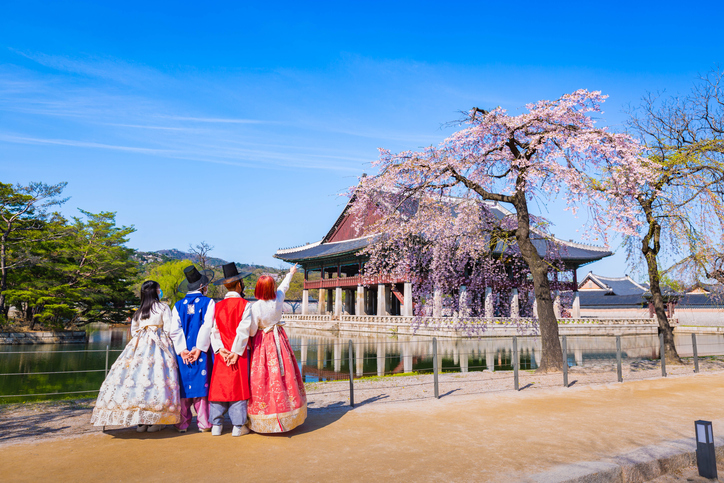
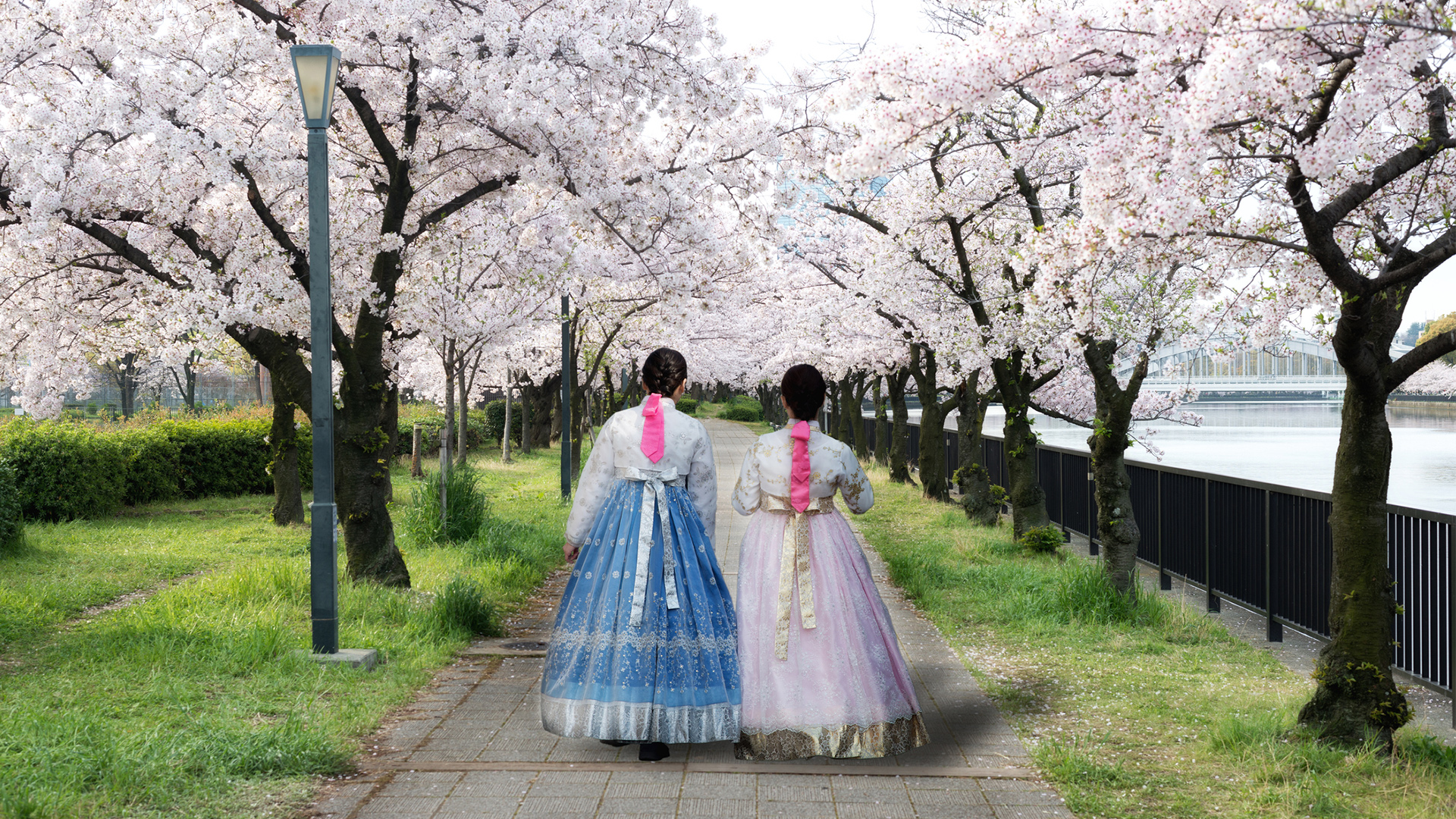
After having your gourmet breakfast at the hotel. Depart to Nami island, is a half-moon-shaped isle. If you have heard or seen the famous Korean drama “Winter Sonata”, you’ll already be familiar with this romantic island. One of the most special characteristics about this beautiful island is that it showcases a different, yet equally amazing, scenic experience each season, making it the perfect day trip from Seoul, any time of the year. Return to Seoul for visit Gyeongbokgung Palace, is a royal palace, first constructed in 1394 and reconstructed in 1867, it was the main and largest palace of the Five Grand Palaces built by the Joseon Dynasty. Enjoy time for experience of wearing Hanbok to take a lot of pictures. Continue tour to the area of Bukchon Hanok Village, the only place in Seoul where hundreds of traditional Korean houses, or hanoks, are clustered together. It is an important area for culture and the arts, with its number of museums, craft workshops and historic landmarks.
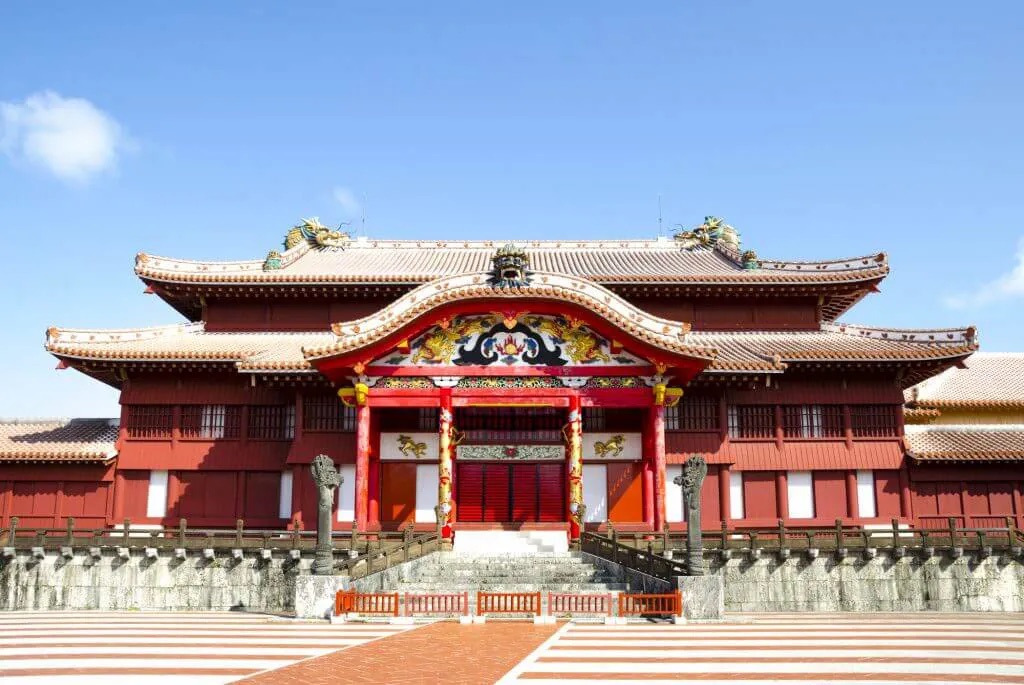
Fly direct from Seoul to Okinawa Island with the history evolved from an independent trading nation (Ryukyu Kingdom) into a Japanese prefecture, shaped significantly by its 1945 battle and subsequent US military presence. Originally unified in 1429, the kingdom flourished as a maritime crossroads before 1609 Japanese invasion. Annexed by Japan in 1879, it suffered massive casualties during WWII and remained under US administration until 1972. Visit Shurijo Castle symbolizes the history and culture of Okinawa, and its history is that of the Ryukyu Kingdom itself.
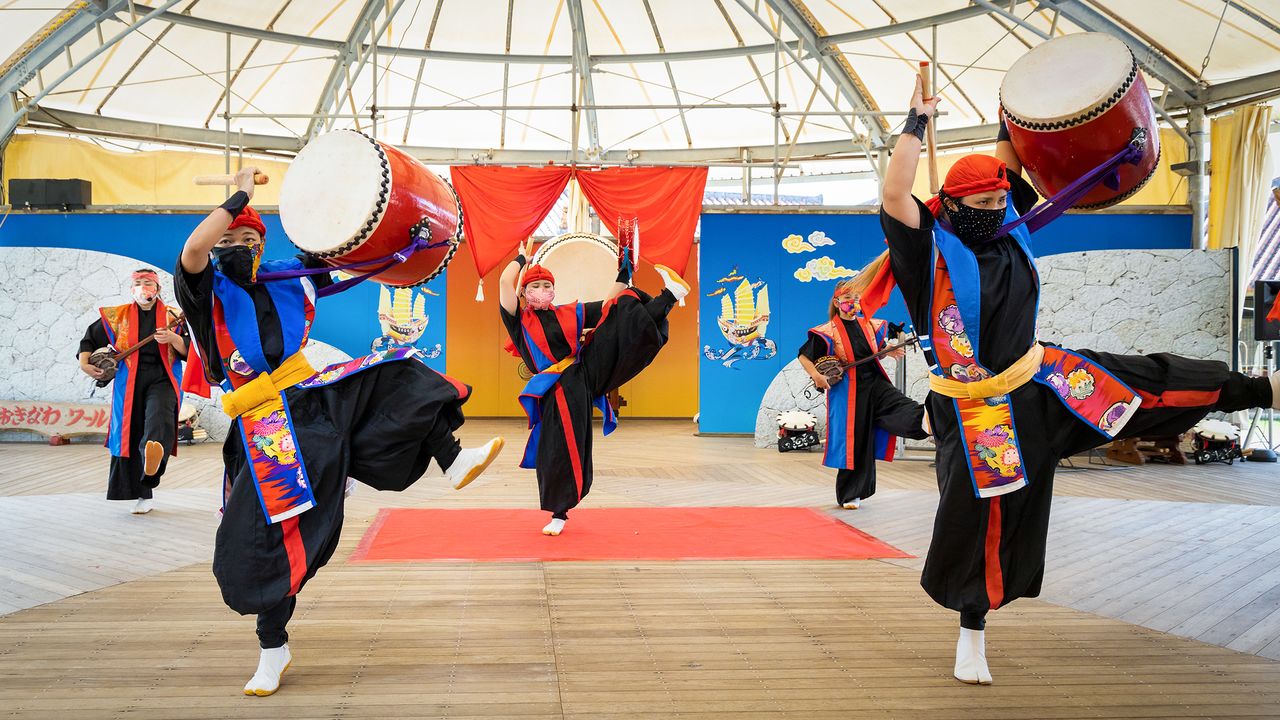
In 2000, Shuri Castle was designated as a World Heritage Site. Visit Ryukyu Mura, is a small theme park about traditional Okinawan culture in the form of a recreated village from the times of the Ryukyu Kingdom.
Enjoy your free morning. Tour stays at the hotel Monterey Okinawa Spa & Resort is a luxurious resort that overlooks the famous Tiger Beach, featuring a unique blend of British Colonial architecture and the natural beauty of Okinawa. Afternoon enjoy your fun time at Kokusai Street is home to famous department stores and shopping malls, such as Mitsukoshi, large-scale discount retailer Don Quijote, numerous souvenir stores, and lively local street food.
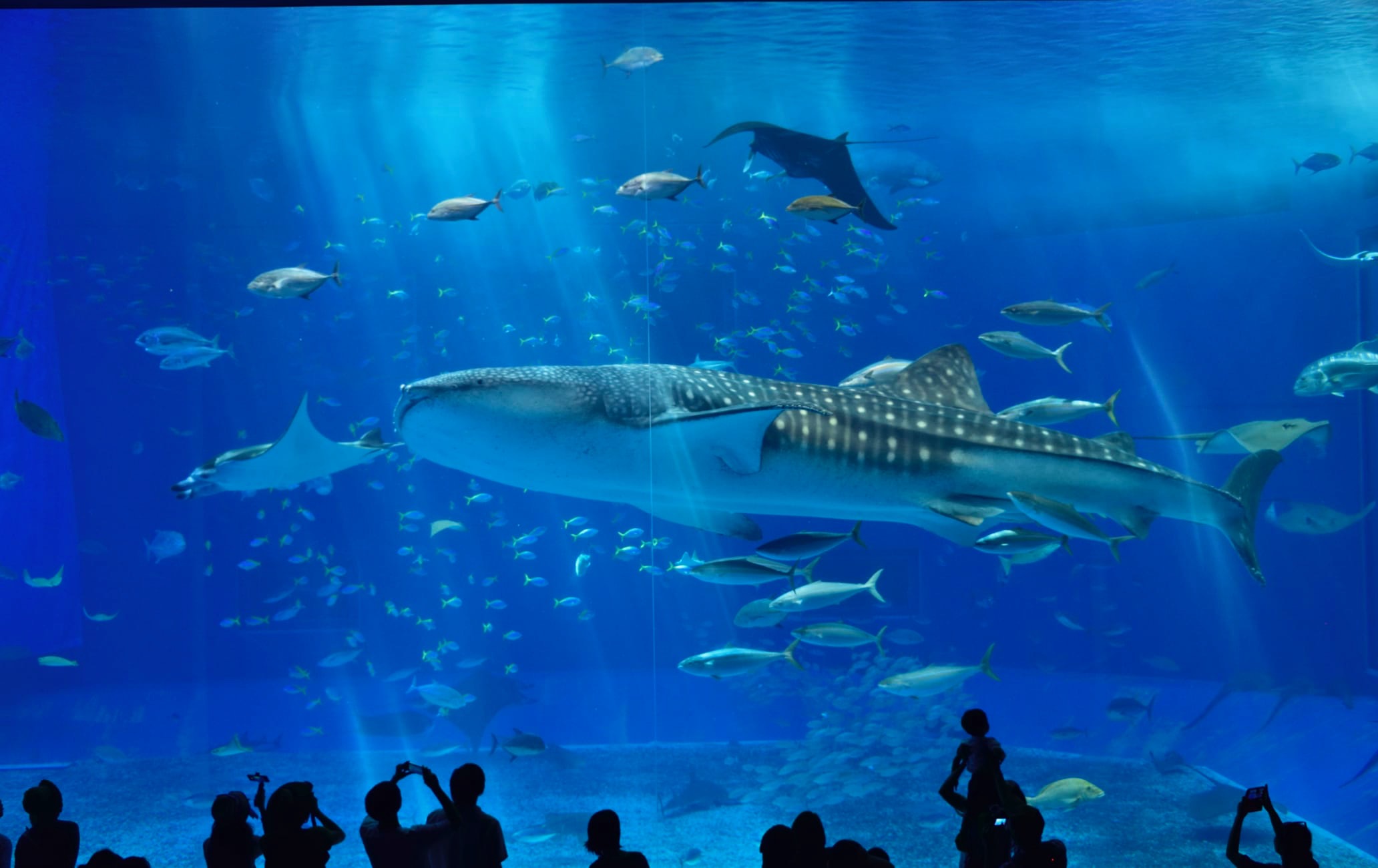
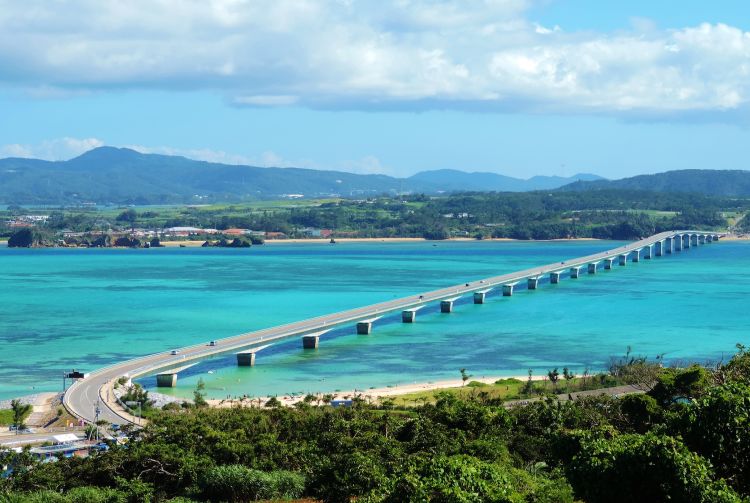
After have your gourmet breakfast at the hotel. Depart to visit the Churaumi Aquarium, introduces you to the mystery of Okinawa’s marine creatures. Starting with the naturally lit Coral Sea tank, which exhibits a large selection of coral reef. Next is the enormous, dynamic Kuroshio Sea tank, where you can observe the world’s biggest fish as well as whale sharks and manta rays. And as you go deeper into the aquarium, you will encounter the Deep Sea tank, in which the which the mysterious deep sea of Okinawa is reproduced, allowing you to experience Okinawa’s entire underwater world. Continue to Kouri is the paradise island with pristine beaches, crystal-clear waters, and the gradation of the sea colors is beautiful. Spending times at Kouri Ocean Tower, a viewing tower where you can see the beautiful blue of the sky and sea. The white observation tower at a height of 82 meters above sea level is in a great location to overlook Kouri Bridge.
Morning depart to visit Okinawa World, a touristy theme park about Okinawan culture. The park’s main attractions are a massive natural cave, a craft village and a snake museum. On the way to the airport, stop to visit and have your own lunch at Umikaji Terrace features more than 40 restaurants, cafés and shops. The low, white structures lined up in terraced rows each have a beautiful view of the sea for a distinctly Mediterranean flair.
Flight to SFO or LAX.
Travel should amaze you. It should be memorable from first to last, and full of awe-inspiring moments. Travel should also be relaxing, spent discovering your destinations through exclusive local experiences and dining on only the best local cuisine.
Join the tour “Korea & Okinawa” to experience travel at its finest on an expertly crafted guided journey, with a dedicated team of local guides and a tour leader who always strives to accommodate your needs.
The following terms apply to all AV Travel tour reservations. By making a reservation or submitting payment, travelers acknowledge that they have read and agree to AV Travel’s full Terms & Conditions.
Tour Itinerary & Pricing
Deposit & Payment Policy
Cancellation Policy
Tour Price Exclusions
The published tour fare does not include the following items:
Travel Documents
Travel Insurance
Travel Risk Acknowledgment
*For complete Terms & Conditions, including cancellation policies, supplier responsibilities, and liability limitations, please refer to AV Travel’s official Terms & Conditions. https://avtravel.com/about-us-1/