Chile – Argentina
Santiago – Puerto Natales – Torres del Paine National Park – El Calafate – Argentino Lake & Upsala Glacier – Perito Moreno Glacier – Buenos Aires
Tour 01: Apr 03 – Apr 13, 2027 From: $5,995 + Airline Tax
Tour 02: Oct 02 – Oct 12, 2027 From: To be announced
Inclusive of international airfares
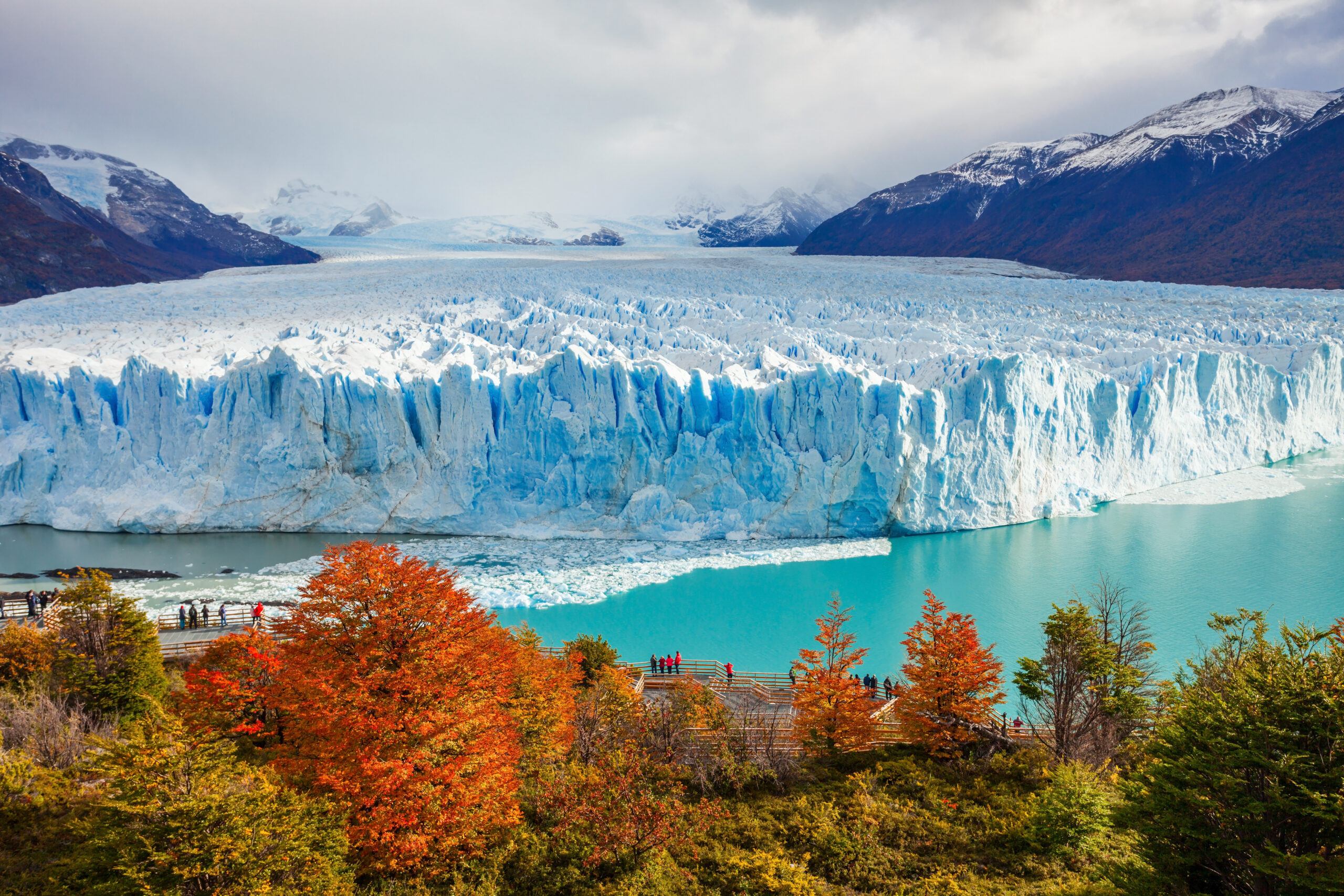
The Perito Moreno Glacier is a glacier located in the Los Glaciares National Park in Santa Cruz Province, Argentina.
Located at the southern edge of South America, stretching across both Argentina and Chile, Patagonia is often referred to as “the end of the world” — a land of raw, untouched beauty and captivating wilderness. Divided by the majestic Andes Mountains, Patagonia reveals two contrasting yet harmonious landscapes. On the Chilean side, dramatic scenery unfolds with deep fjords, lush temperate rainforests, and striking turquoise lakes. In autumn, golden foliage blankets the granite peaks of Torres del Paine, creating a picture-perfect setting for nature lovers and photography enthusiasts. Meanwhile, the Argentine side offers a vast and tranquil beauty. Endless steppes transform into warm autumn hues, providing a stunning contrast to the icy blue tones of massive glaciers that define this side of Patagonia.
The journey through Patagonia takes travelers to Torres del Paine National Park, one of the most beautiful national parks in the world, crossing vast steppes, glaciers, and the untouched fjords connecting Puerto Natales and El Calafate, as well as cruising across the glacial waters of Lake Argentino. Beyond its breathtaking natural landscapes, travelers also have the opportunity to experience the vibrant city life and rich local culture of two South American capitals: Santiago and Buenos Aires.



Check in at LAX for your flight to Santiago, Chile.
Arrival in Santiago, the capital and the political, economic, and cultural heart of Chile, visitors are welcomed into a vast valley framed by the majestic Andes Mountains to the east and the Coastal Range to the west. Thanks to this unique geographical setting, Santiago offers a striking landscape: on clear days, snow-capped Andean peaks are visible right from the city center, creating a dramatic contrast between modern urban life and untouched nature.
Check in at the hotel. (B/D)
Embark on a city tour:
Begin your exploration of Santiago in the city center along Alameda Avenue, the main artery and a symbol of Chile’s modern development. The first stop is San Francisco Church, the oldest surviving colonial building in Santiago, dating back to the 16th century. Built in traditional Spanish colonial style, the church features thick stone walls, distinctive red-tiled roofs, and richly decorated interiors. Despite numerous earthquakes over the centuries, it has remained remarkably intact, standing as a testament to early construction techniques and the deep-rooted religious life of Chilean society.
Next, visit Santa Lucia Hill, the very site where Spanish conquistador Pedro de Valdivia founded Santiago in 1541. Today, the hill has been transformed into a beautifully landscaped park with stone pathways, fountains, and neoclassical terraces. It offers not only historical significance but also a green retreat, illustrating the harmonious blend of heritage and modern urban life.
Continue to Plaza de Armas, the historical and cultural heart of Santiago. Designed according to Spanish colonial urban planning, the square is surrounded by key landmarks including the Metropolitan Cathedral and important administrative buildings. Bustling with street performers, locals, and visitors, the plaza vividly reflects the vibrant cultural life of the city.
From here, proceed to the Central Market, a 19th-century structure known for its elegant wrought-iron architecture influenced by European design. The market is a culinary hotspot, famous for its fresh seafood such as king crab, fish, and traditional Chilean seafood stews. Its lively atmosphere provides an authentic glimpse into local daily life and gastronomic culture.
Leaving downtown behind, head to Bellavista, Santiago’s bohemian and artistic district. Once home to many prominent artists, including Nobel Prize-winning poet Pablo Neruda, the neighborhood is known for its colorful houses, vibrant street art, and eclectic cafés and restaurants. It embodies a creative, free-spirited side of modern Santiago.
The final stop is San Cristóbal Hill, part of the vast Metropolitan Park. At its summit stands a 22-meter statue of the Virgin Mary, an important religious symbol for Chileans. From the top, enjoy breathtaking panoramic views of Santiago stretching below, framed by the majestic Andes Mountains—an unforgettable experience that highlights the city’s unique geography and natural beauty.
(B/D)
Transfer to the airport for a flight to Puerto Natales.
Puerto Natales is a small town located in southern Chile, on the shores of the fjord Seno Última Esperanza, surrounded by mountains, glaciers, and the vast wind-swept steppes characteristic of Patagonia. Thanks to this unique geographical setting, Puerto Natales serves as an important gateway to Torres del Paine National Park.
The town offers a peaceful yet spectacular landscape. The calm fjord waters reflect distant mountain ranges, while the ever-changing light creates distinctive hues throughout the day—from cool blue-gray tones in the morning to warm golden shades at sunset. The open space, strong winds, and fresh air provide a sense of tranquility and untouched beauty—an ideal “pause” after days of exploring Patagonia’s rugged wilderness.
The architecture of Puerto Natales is simple and functional yet full of character. Low-rise, colorful houses are built to withstand the cold climate and strong winds, creating a setting that feels both rustic and cozy. Along the waterfront, visitors will find walking paths, small piers, and scenic viewpoints where they can easily experience the slow pace of life in this remote region.
Puerto Natales clearly reflects the lifestyle of the Patagonian people—closely connected to nature, unpretentious yet rich in identity. The town developed from sheep farming and maritime activities, and it still retains the spirit of a hardworking southern community. Visitors can explore local handicraft shops offering wool, leather, and souvenirs, as well as small art spaces that embody the essence of Patagonia.
The cuisine of Puerto Natales is a memorable highlight, combining local ingredients with traditional cooking styles. The most iconic dish is Patagonian lamb (asado de cordero), slow-roasted over an open fire to preserve its rich and natural flavor. Fresh seafood from the cold southern waters of Chile—such as king crab, oysters, and fish—is also widely available, typically prepared simply to highlight its natural sweetness. In the warm atmosphere of small waterfront restaurants, dinner in Puerto Natales becomes not only a culinary experience but also a way to fully embrace the spirit of this land at the end of the world.
(B/D)
Begin your journey exploring Torres del Paine National Park – one of South America’s most spectacular natural wonders, covering an area of 113,000 hectares and designated as a UNESCO Biosphere Reserve in 1978. As you travel into the park, scenic roads wind alongside majestic lakes with striking turquoise hues, reflecting the dramatic Andes Mountains and creating a breathtaking introduction to Patagonia’s wilderness.
Explore iconic viewpoints such as Los Cuernos and Lago Pehoé, where jagged granite peaks rise dramatically above crystal-clear waters. The reflections of the mountains on the lake create a picture-perfect landscape, ideal for photography and nature appreciation. Next, visit Salto Grande Waterfall, where powerful cascades of white water rush through a rugged landscape, delivering an impressive and dynamic natural spectacle. The journey then leads to Lago Grey, famous for its floating blue icebergs that have broken off from Grey Glacier, forming a surreal and awe-inspiring scene.
Throughout the day, you may encounter Patagonia’s unique wildlife, including herds of guanacos, foxes, swans, and a variety of native bird species—offering an authentic and immersive experience in the wild. (B/L)
Leaving Torres del Paine National Park, the journey toward El Calafate is a truly Patagonian experience—crossing the Chile–Argentina border while remaining within the same vast, untouched natural landscape that seems almost unaffected by human presence.
As the route approaches the border area, the landscape subtly transitions between the two countries: the distant Andes Mountains remain as a natural backdrop, while the vast steppe continues to dominate the scenery. Closer to El Calafate, the environment begins to change again as large bodies of water appear—signs of the Patagonian glacial system. El Calafate is a charming tourist village located on the southern shore of Lake Argentino in the Patagonia region of southern Argentina. It lies about 80 km (50 miles) from Los Glaciares National Park, one of the most famous national parks in the world, renowned for its spectacular glaciers and breathtaking natural scenery.
With its fresh air, peaceful atmosphere, and distant snow-capped mountains, El Calafate is considered the main gateway to exploring Patagonia’s icy wilderness. This small town offers a warm and welcoming setting, making it an ideal stop before or after a journey into the glaciers.
A special highlight of El Calafate is the region’s first ice museum, where visitors can learn about the formation of glaciers, the unique ice ecosystem, and the important role glaciers play in the natural environment. (B/D)
Begin the journey with a boat cruise across Lake Argentino, the turquoise jewel of Patagonia, where majestic mountains and towering glaciers are perfectly reflected on the crystal-clear waters. The navigation first enters Boca del Diablo, the narrowest section of the lake, where the waterway tightens between rocky cliffs, creating the feeling of passing through a natural gateway into a remote glacial world.
As the cruise continues westward, the scenery gradually transforms. Open waters give way to dense native forests and soaring mountain ranges. In autumn, the landscape is painted in vibrant shades of gold, orange, and red from lenga and ñire trees, forming a breathtaking and serene natural canvas.
The boat then reaches Spegazzini Channel, where guests disembark to begin a gentle trekking experience along Bahia de Todos los Glaciares toward the Spegazzini Refuge, a scenic rest point surrounded by dramatic wilderness. From here, two trekking options are available:
Sendero del Bosque (Forest Trail): A peaceful walk through native lenga and ñire forests, especially spectacular in autumn when the foliage turns vivid shades of red and gold. The trail leads to scenic viewpoints overlooking the lake and surrounding glaciers, suitable for most travelers.
De Agostini Viewpoint Trail: From the refuge, follow elevated boardwalks to reach the De Agostini Viewpoint. Here, visitors are rewarded with one of the most impressive frontal views of Spegazzini Glacier, where sheer ice walls rise dramatically up to 135 meters, creating a truly awe-inspiring natural spectacle.
After the visit, guests return to the boat and continue navigating across Lake Argentino, carrying unforgettable memories of Patagonia’s extraordinary frozen landscapes.
(B/L)
Discover Perito Moreno Glacier, one of the most breathtaking natural wonders of Patagonia, located within Los Glaciares National Park. Unlike many glaciers around the world that are gradually retreating, Perito Moreno continues to advance, forming massive blue ice walls rising up to 60–70 meters above Lake Argentino. The sound of cracking ice and the dramatic collapse of large ice blocks into the water create a dynamic and awe-inspiring scene, as if witnessing a living natural phenomenon in constant motion. The day offers a variety of unforgettable perspectives and experiences. Visitors can walk along a well-designed network of wooden walkways, leading to multiple panoramic viewpoints at different elevations—perfect for capturing spectacular photos and fully appreciating the immense scale of the glacier.
Embark on a glacier cruise: the journey begins at the Bajo Las Sombras pier across Rico Lake, the southern arm of Lake Argentino. During the navigation, travelers will admire massive floating icebergs in various shapes drifting gently across the turquoise waters. With a bit of luck, guests may witness one of nature’s most spectacular phenomena—large chunks of ice breaking off from the Perito Moreno Glacier and crashing into the lake. This dramatic “calving” event produces a thunderous sound and sends waves rippling across the water. (B/D)
Transfer to the airport for a departure flight to Buenos Aires, the capital of Argentina and the most European-influenced city in South America, often referred to as the “Paris of South America.”
The name Buenos Aires originates from “Nuestra Señora Santa María del Buen Ayre,” referring to a saint believed to have protected and guided sailors. For over 400 years, from the 16th century until after World War II in 1945, the port of Buenos Aires has been a welcoming land for European immigrants. When early Spanish explorers arrived, they noticed indigenous people wearing silver ornaments, which led them to name the land “Argentina,” meaning the “Land of Silver.” Founded in 1536, Buenos Aires officially became the capital of the Argentine Republic in 1880.
One of the most highlights is Café Tortoni, one of the oldest and most iconic coffee houses in Buenos Aires. Located on the bustling Avenida de Mayo, it is often regarded as a “living museum” that preserves the cultural and artistic spirit of the city. Founded in 1858 by a French immigrant, Café Tortoni was inspired by the famous café of the same name in Paris, once a meeting place for Europe’s intellectuals and artists. After more than 160 years, it still retains its classic European-style architecture, featuring high ceilings, wooden interiors, warm yellow lighting, and a timeless atmosphere rich in history. More than just a café, Tortoni has long been an important cultural hub in Buenos Aires. Throughout the 20th century, it served as a gathering place for renowned writers, poets, and musicians such as Jorge Luis Borges and Alfonsina Storni. Its basement houses a tango and jazz stage, where live performances are regularly held, recreating the city’s unique bohemian artistic atmosphere.
Buenos Aires is also widely recognized as the birthplace of tango. Emerging in the late 19th century in working-class neighborhoods and port areas, tango is a fusion of diverse immigrant cultures from Europe and Africa, expressing stories of love, loneliness, and longing. With its deep artistic and historical value, tango has been recognized by UNESCO as an Intangible Cultural Heritage of Humanity. Today, visitors can witness tango performances almost everywhere—from elegant theaters to lively cafés and even street corners.
An evening in Buenos Aires offers a complete immersion into the essence of Argentine culture with a special steak dinner and captivating tango show—an unforgettable combination of gastronomy and performing arts. In a warm and elegant setting, guests will enjoy world-famous Argentine beef steaks, especially signature cuts such as bife de chorizo and ojo de bife, known for their tenderness, juiciness, and rich flavor thanks to cattle raised freely on the Pampas grasslands. The dinner is often paired with a glass of Malbec wine, creating a truly authentic South American dining experience.
After dinner, the atmosphere shifts into a vibrant artistic performance featuring a mesmerizing tango show. Professional dancers bring Argentina’s iconic dance to life with passionate, powerful, yet deeply emotional movements. The soulful bandoneón music combined with dramatic stage lighting creates an enchanting and romantic ambiance. (B/D)
This city tour of Buenos Aires takes you through the most iconic landmarks of Argentina’s vibrant capital.
Begin at Plaza de Mayo, the historic and political heart of the city, surrounded by significant government buildings and witnessing many key events in Argentina’s history. From there, step inside the Metropolitan Cathedral, an impressive neoclassical church that serves as the main Catholic place of worship in Buenos Aires and reflects the city’s deep religious heritage.
Continue to Caminito in the colorful La Boca neighborhood, a lively open-air museum known for its brightly painted houses, tango dancers, and artistic street atmosphere that showcases the city’s Italian immigrant roots and bohemian spirit.
Next, pass by the famous Boca Juniors football stadium, La Bombonera, an iconic landmark for football fans and home to one of the most passionate clubs in the world, representing Argentina’s deep love for the sport.
Finally, head to Recoleta, one of the most elegant districts in the city, known for its Parisian-style architecture, upscale ambiance, and the famous Recoleta Cemetery, where many of Argentina’s most prominent figures are laid to rest, including Eva Perón, the wife of President Perón and Argentina’s most iconic woman, immortalized in the famous song “Don’t Cry for Me, Argentina.”
In the afternoon, transfer to the airport for a flight back to the United States. (B)
Back to the USA.
The following terms apply to all AV Travel tour reservations. By making a reservation or submitting payment, travelers acknowledge that they have read and agree to AV Travel’s full Terms & Conditions.
Tour Itinerary & Pricing
Deposit & Payment Policy
Cancellation Policy
Tour Price Exclusions
The published tour fare does not include the following items:
Travel Documents
Travel Insurance
Travel Risk Acknowledgment
*For complete Terms & Conditions, including cancellation policies, supplier responsibilities, and liability limitations, please refer to AV Travel’s official Terms & Conditions. https://avtravel.com/about-us-1/