SOUTH OF FRANCE:
LAVENDER IN FULL BLOOM
France – Monaco
Marseille – Aix-en-Provence – Avignon – Sorgues – Le Barroux – Mines de Bruoux – Coquillade Provence – Pernes-les-Fontaines – L’Isle-sur-la-Sorgue – Gréoux-les-Bains – Valensole (Lavender field) – Moustiers-Sainte-Marie – Gorges du Verdon – Castellane – Nice – Saint Tropez – Cannes – Monaco – Eze
Tour: June 23 – July 02, 2027
From: $4,995 + Airfare
Experience the breathtaking lavender fields of Provence for the first time in early summer, when the flowers are in full bloom—perfect for savoring the scenery and capturing stunning photos of endless purple landscapes under the Provençal sky.





Check-in at Los Angeles Airport (LAX). Depart for Marseille, France.
Arrive in Marseille, the largest port city in southern France. Founded by Greek settlers from Phocaea around 600 BC, Marseille—then known as Massalia—is one of the oldest continuously inhabited cities in Europe. Thanks to its strategic location on the Mediterranean coast, Marseille developed into a major maritime trading center and an important gateway connecting France with the wider Mediterranean world. Over thousands of years, Greek, Roman, Provençal and Mediterranean influences have shaped the city’s distinctive and multicultural identity.
Check in at the hotel. (D)
Some of Marseille’s most iconic landmarks are:
• Vieux-Port (Old Port) – The historic heart of Marseille. Established more than 2,600 years ago, Vieux-Port served as a vital trading gateway connecting Marseille with Greece, Rome, North Africa, the Middle East and the wider Mediterranean region. By the 19th century, the rapid expansion of maritime trade made the Old Port increasingly inadequate for the growing volume of ships. A new commercial port was developed in the La Joliette area, while Vieux-Port gradually transformed into the social, cultural and tourist heart of Marseille. It is one of the best places to experience the city’s Mediterranean way of life—stroll along the waterfront, visit the morning fish market, enjoy fresh seafood, watch boats come and go, or admire Notre-Dame de la Garde rising above the city.
• Notre-Dame de la Garde – One of Marseille’s most iconic landmarks. Originally the site of a chapel dedicated to the Virgin Mary, built in 1214, it gradually became an important pilgrimage destination, particularly for sailors who had survived shipwrecks. In 1536, a fortress was built on the hill to protect Marseille. The present basilica was constructed beginning in 1853, replacing the earlier church to accommodate the growing number of pilgrims. Designed by architect Henri-Jacques Espérandieu, the basilica is renowned for its distinctive Romanesque-Byzantine architecture. Its interior is richly decorated with vibrant mosaics, multicolored marble and votive offerings. Crowning the bell tower is the monumental gilded statue of the Virgin Mary, known as “La Bonne Mère” (The Good Mother), installed in 1869 and regarded as the protective guardian of Marseille. Rising approximately 148 meters above sea level, the basilica offers breathtaking panoramic views over Marseille and the Mediterranean Sea.
• Le Panier – The oldest neighborhood in Marseille, situated on the hills just north of Vieux-Port. The area was once part of ancient Massalia, founded by the Greeks around 600 BC. For centuries, it remained within the city’s defensive walls. Limited space led to densely built houses and a network of narrow, steep streets and stairways. From the 17th century onward, wealthy residents gradually moved to newer parts of the city, and Le Panier became a working-class neighborhood closely associated with fishermen and laborers. Today, Le Panier is known for its distinctly Mediterranean character, with pastel façades, small balconies, stone stairways, colorful shutters, street art, cafés and artisan boutiques.
• Cathédrale Sainte-Marie-Majeure, also known as La Major, was built during the 19th century, when Marseille was experiencing rapid economic, demographic and commercial growth. The foundation stone was laid in 1852 by Louis-Napoléon Bonaparte. Construction took 44 years, and the cathedral was consecrated in 1896. La Major is one of the most monumental religious buildings in France. According to the French Ministry of Culture, it is the largest religious building constructed in France during the 19th century, measuring approximately 142 meters long and accommodating around 3,000 people. Its architecture combines Romanesque and Byzantine influences, particularly striking in its alternating bands of light and dark stone that create its distinctive striped façade.
• Fort Saint-Jean – The site dates back to the 12th century, when the Knights Hospitaller of Saint John established a religious and military presence here during the Crusades. The complex was expanded over subsequent centuries, including the Tour du Roi René, built in the 15th century. In the 17th century, under Louis XIV, the fortifications were significantly strengthened following Marseille’s revolt against royal authority. Vauban later further developed the defensive system. Today, Fort Saint-Jean covers approximately 15,000 square meters, including around 12,000 square meters of gardens and approximately 1,100 square meters of exhibition space belonging to the MuCEM complex.
(B/D)
Discover Aix-en-Provence, one of the most beautiful and distinctive cities in Provence. The city is renowned for its more than 2,000 years of history, tree-lined boulevards, numerous fountains, elegant Baroque mansions, colorful Provençal markets and its deep connection with the renowned artist Paul Cézanne.
The history of Aix-en-Provence spans more than 2,000 years. Before the Roman era, the area was inhabited by the Celto-Ligurian people. In 122 BC, the Romans founded Aquae Sextiae, named after the Roman consul Sextius Calvinus and the area’s thermal springs. The city developed into a Roman colony, an important stop along the route between Italy and Spain, and a center for thermal baths. During the Middle Ages, Aix grew increasingly important. In 1182, it became the residence of the Counts of Provence. In 1409, Louis II of Anjou founded the university, establishing Aix as an important intellectual and cultural center. Under René of Anjou, the city experienced a cultural and artistic golden age. From the 17th century onward, Aix underwent major urban development. Aristocrats, magistrates and wealthy families moved into the Mazarin Quarter, where they built magnificent private mansions (hôtels particuliers). Much of the city’s elegant architectural character today dates from this period.
Aix-en-Provence is inseparable from the name of renowned artist Paul Cézanne. Born in Aix in 1839, Cézanne spent much of his life in the city and the surrounding Provence region. The light, colors and landscapes of Provence became important sources of inspiration for his art. Visitors can follow the Cézanne Trail, which connects places associated with his childhood, family, friends, cafés and artistic life.
In the afternoon, travel to Avignon, the legendary “City of the Popes.” Located on the banks of the Rhône River in Provence, Avignon is one of the most historically significant cities in southern France. The city reached its golden age in the 14th century, when it became the seat of the papacy. From 1309 to 1377, seven popes resided in Avignon, followed by two more during the Western Schism. The presence of the papacy transformed Avignon into a major religious, political and cultural center of medieval Europe.
Avignon is renowned for its remarkably well-preserved medieval ramparts, which surround the historic center. At its heart stands the Palais des Papes (Palace of the Popes), a monumental Gothic complex that combines the grandeur of a palace with the strength of a fortress, reflecting the immense power of the medieval papacy. The palace was built in an astonishingly short period of just 17 years, from 1335 to 1352, under Popes Benedict XII and Clement VI. Covering approximately 15,000 square meters, it is considered the largest Gothic palace of the Middle Ages. The complex features massive stone walls, towers, grand halls, chapels, courtyards and private papal apartments. Inside, visitors can admire surviving 14th-century frescoes, particularly works associated with Italian artist Matteo Giovannetti, reflecting the artistic sophistication and grandeur of the papal court. The historic center, including the Palais des Papes, the Episcopal Ensemble and the Pont d’Avignon, was inscribed as a UNESCO World Heritage Site in 1995.
Pont d’Avignon (Avignon Bridge) was built in the 12th century and once crossed the Rhône River, connecting Avignon with the opposite bank. Originally comprising 22 arches, only four arches remain today, creating one of the most recognizable landmarks in Provence. The bridge became world-famous through the traditional French song “Sur le Pont d’Avignon.” Visitors can walk along the surviving section and enjoy views of the Rhône, the medieval ramparts and the Palais des Papes.
Check in at the hotel. (B/D)
Embark your journey along the lavender route and explore these highlights:
Le Barroux: Tour the Château du Barroux and the whiskey distillery, discovering the town’s long history and local specialties. Stop at the lavender fields near the abbey for beautiful photo opportunities.
Mines de Bruoux: Explore the Bruoux limestone mines on a one-hour guided tour, learning about the history of mining and its role in the Provence region.
Lustrerie Mathieu: Visit the glassware workshop, observe the intricate artisan techniques, and admire the exquisite handcrafted products.
Domaine de la Coquillade: Tour the wine cellar and enjoy a wine tasting, immersing yourself in the rich wine culture of Provence.
Pernes-les-Fontaines: Discover the historic town with its ancient fountains, tree-lined streets, and traditional artisan workshops. Visit local craft studios and experience the charm of Provence’s heritage.
Back to Avignon. (B/D)
Continue the journey along the Lavender Route with a visit to the Musée de la Lavande Luberon, nestled in the heart of Provence’s Luberon region. Founded in 1991 by Georges Lincelé, the museum was established to preserve and showcase the heritage of true Provence lavender. Housed in a traditional Provençal stone farmhouse surrounded by lavender fields, olive trees and pine trees, the museum offers an authentic glimpse into the region’s lavender-growing traditions. Visitors can discover the history of lavender cultivation and distillation from the 16th century to the present day, learn about traditional harvesting methods and explore the process of producing lavender essential oil. The museum’s collection features 346 objects related to lavender cultivation, distillation and perfumery.
Journey to Valensole, the heart of Provence’s lavender country. The Valensole Plateau is world-famous for its vast, picture-perfect lavender fields, making it one of the top destinations in France for photography. Here, visitors can admire and photograph endless purple fields under the bright blue skies of the Mediterranean. Explore and shop for souvenirs, from essential oils, soaps, and candles to handcrafted lavender products, bringing home a piece of Provence’s fragrance and charm.
Valensole is also famous for its almond groves, stretching across gentle hillsides. In summer, the blooming almond trees create a peaceful and poetic landscape. Stop by the local workshops producing almond and herbal products, including essential oils, liqueurs, and handcrafted specialties with a distinctly Provençal flavor.
Stop by Moustiers-Sainte-Marie, a picturesque village nestled at the foot of a cliff, renowned for its traditional faience pottery and postcard-perfect scenery.
Continue to Gréoux-les-Bains, a charming town renowned for its natural thermal springs and Roman-era mineral spas. The name “les Bains” reflects the town’s long-standing tradition of therapeutic bathing, offering visitors a chance to relax, rejuvenate, and enjoy the beauty of Provence.
Check in at a hotel. (B/D)
Discover the Gorges du Verdon, one of the most spectacular river canyons in Europe, carved over millions of years as the Verdon River eroded the limestone landscape of southeastern France. Stretching approximately 25 kilometers, the canyon features dramatic limestone cliffs rising more than 700 meters above the river in some areas. The striking contrast between the towering white cliffs and the canyon’s iconic turquoise waters creates one of France’s most breathtaking natural landscapes. Today, the area is protected as part of the Verdon Regional Natural Park, established in 1997 to preserve the region’s exceptional ecosystems and landscapes. Taking in the panoramic views from above and photographing the dramatic canyon scenery is an experience not to be missed.
Located at the eastern gateway to the Gorges du Verdon, Castellane is a historic Provençal town with roots dating back to antiquity. Thanks to its strategic position along the route through the Verdon region, Castellane once served as an important settlement and trading point. During the Middle Ages, the town developed around its defensive fortifications, while the rocky promontory above became an important military position.
The town’s most distinctive landmark is the Chapel of Notre-Dame du Roc, dramatically perched on a rocky outcrop approximately 184 meters above Castellane. After undergoing several reconstructions and restorations over the centuries, the site became an important pilgrimage destination and one of Castellane’s defining symbols. From Notre-Dame du Roc, visitors can enjoy panoramic views over Castellane, the Verdon Valley and the surrounding mountains.
Stroll through Castellane’s old town, admire its traditional Provençal architecture, browse local shops, stop at a charming café and soak up the peaceful atmosphere of this picturesque mountain town.
Travel to Nice and check in at the hotel. (B/D)
From a small fishing village on the Mediterranean coast, Saint-Tropez has evolved into one of the most famous and glamorous destinations on the French Riviera. The town dates back to antiquity and was once an important coastal settlement. For centuries, its economy was based primarily on fishing, maritime trade and shipbuilding. By the late 19th century and especially in the early 20th century, Saint-Tropez began attracting painters and artists, drawn by the exceptional light of the Mediterranean. Artists such as Paul Signac, Henri Matisse and Pierre Bonnard came here to paint. A major turning point came in the 1950s, when Brigitte Bardot starred in the film And God Created Woman (1956), filmed in Saint-Tropez. The film’s international success transformed the town into an icon of glamour, fashion and the Riviera lifestyle.
Discover some of Saint-Tropez’s highlights:
• Vieux Port (Old Port) – Traditional fishing boats share the waterfront with luxurious yachts, creating the quintessential Saint-Tropez scene. Stroll along the harbor, admire the pastel-colored buildings and cafés, and experience the town’s unique contrast between its traditional fishing-village heritage and its reputation as a playground for the international elite.
• La Ponche (Old Town) – Wander through its narrow cobblestone streets, pastel-yellow houses, small balconies and peaceful little squares, discovering the charming character of historic Saint-Tropez.
• Citadelle de Saint-Tropez (Citadel) – A major defensive fortress built in the early 17th century to protect the town and the Provençal coastline from attacks by sea. Today, the citadel is also one of the best viewpoints in Saint-Tropez, offering spectacular panoramas over the town, harbor and Mediterranean Sea.
If Saint-Tropez is famous for its image of fishing villages, fashion and luxury yachts, Cannes is renowned for cinema, international events and elegant luxury hotels. Originally a small fishing village, Cannes was transformed in the 19th century as European aristocrats and wealthy travelers began visiting the French Riviera for its mild climate and Mediterranean beauty. Lord Brougham, a British statesman, played an important role in establishing Cannes as a fashionable resort in the 19th century. The town subsequently developed rapidly, with grand hotels, elegant villas, gardens and prestigious boulevards. Today, Cannes is world-famous for the Cannes Film Festival, one of the most prestigious film festivals in the world.
Stroll along La Croisette, Cannes’ most famous boulevard, stretching along the Mediterranean waterfront. During the Cannes Film Festival, the boulevard becomes a spectacular gathering place for international film stars, directors, producers and media from around the world. Admire the Palais des Festivals, the iconic venue of the Cannes Film Festival. Its famous red carpet and grand staircase have become among the most recognizable symbols of international cinema. Visitors can also discover the handprints of famous film stars along the Chemin des Étoiles (Walk of Fame) near the Palais des Festivals.
Return to Nice. (B/D)
Explore Nice, the capital of the Côte d’Azur, also known as the French Riviera. Nice is a paradise for lovers of beaches, museums, and shopping.
Cours Saleya Market: A vibrant open-air market located in the heart of the Old Town of Nice. The market is filled with colorful stalls selling fresh flowers, fruits, spices, and regional specialties from Provence, creating a lively and authentic Mediterranean atmosphere.
Castle Hill (Colline du Château): A scenic hill overlooking the city of Nice, once the site of an ancient fortress. Today it is a beautiful park offering spectacular panoramic views of the city, the coastline, and the sparkling waters of the Baie des Anges.
Old Town Nice (Vieux Nice): A charming historic quarter with narrow winding streets, pastel-colored buildings, and flower-filled balconies. It is the perfect place to experience the Mediterranean lifestyle, with cozy cafés, artisan shops, and traditional restaurants.
Promenade des Anglais: The famous seaside boulevard stretching along the Mediterranean coast. Built in the 19th century, it has become an iconic symbol of Nice and is a wonderful place for strolling, cycling, and enjoying views of the turquoise sea.
Cimiez: A historic hillside district north of the city center, known for its Roman ruins, elegant villas, and art museums. The area offers a peaceful and refined atmosphere, contrasting with the lively coastal areas of Nice.
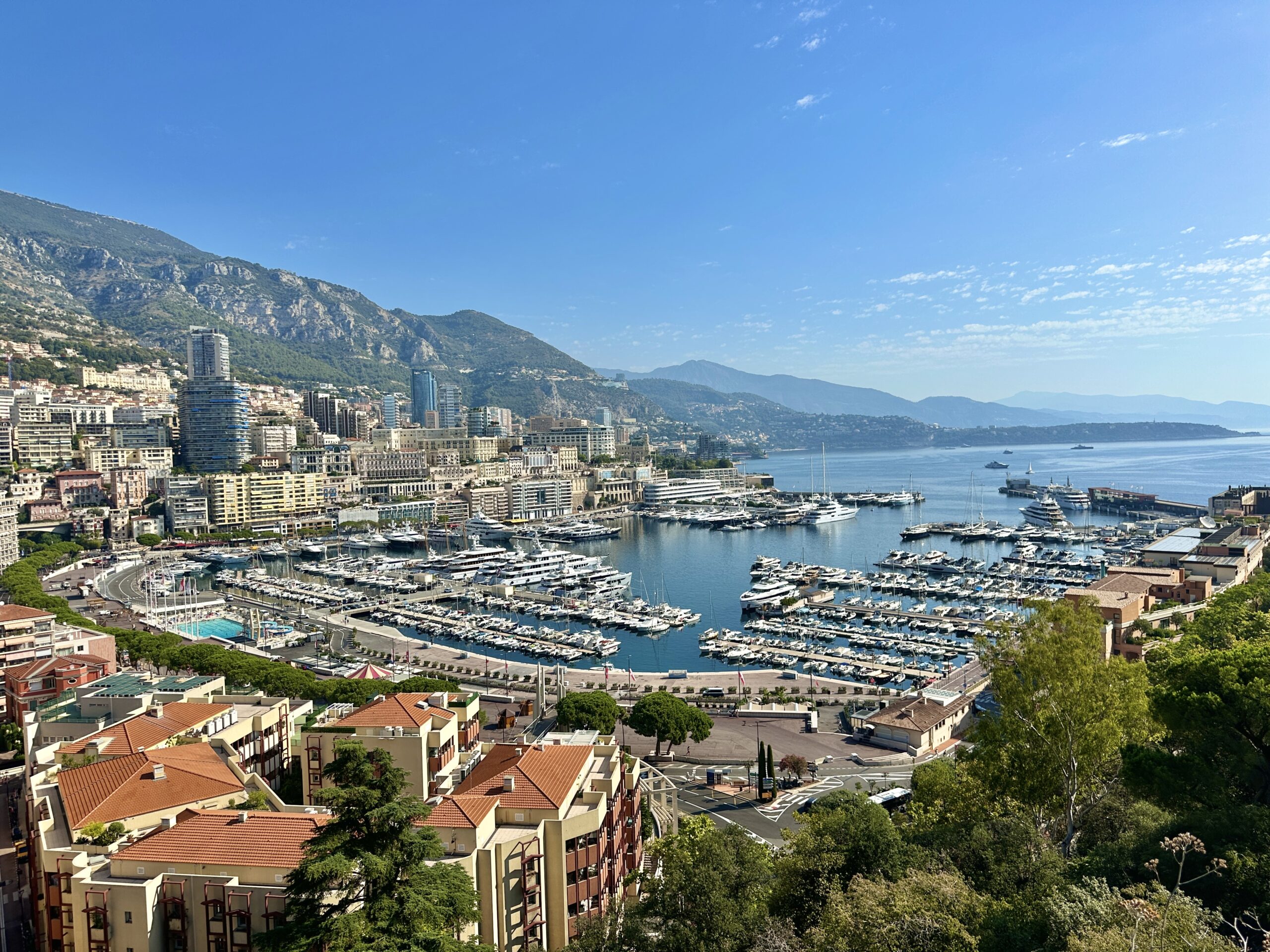
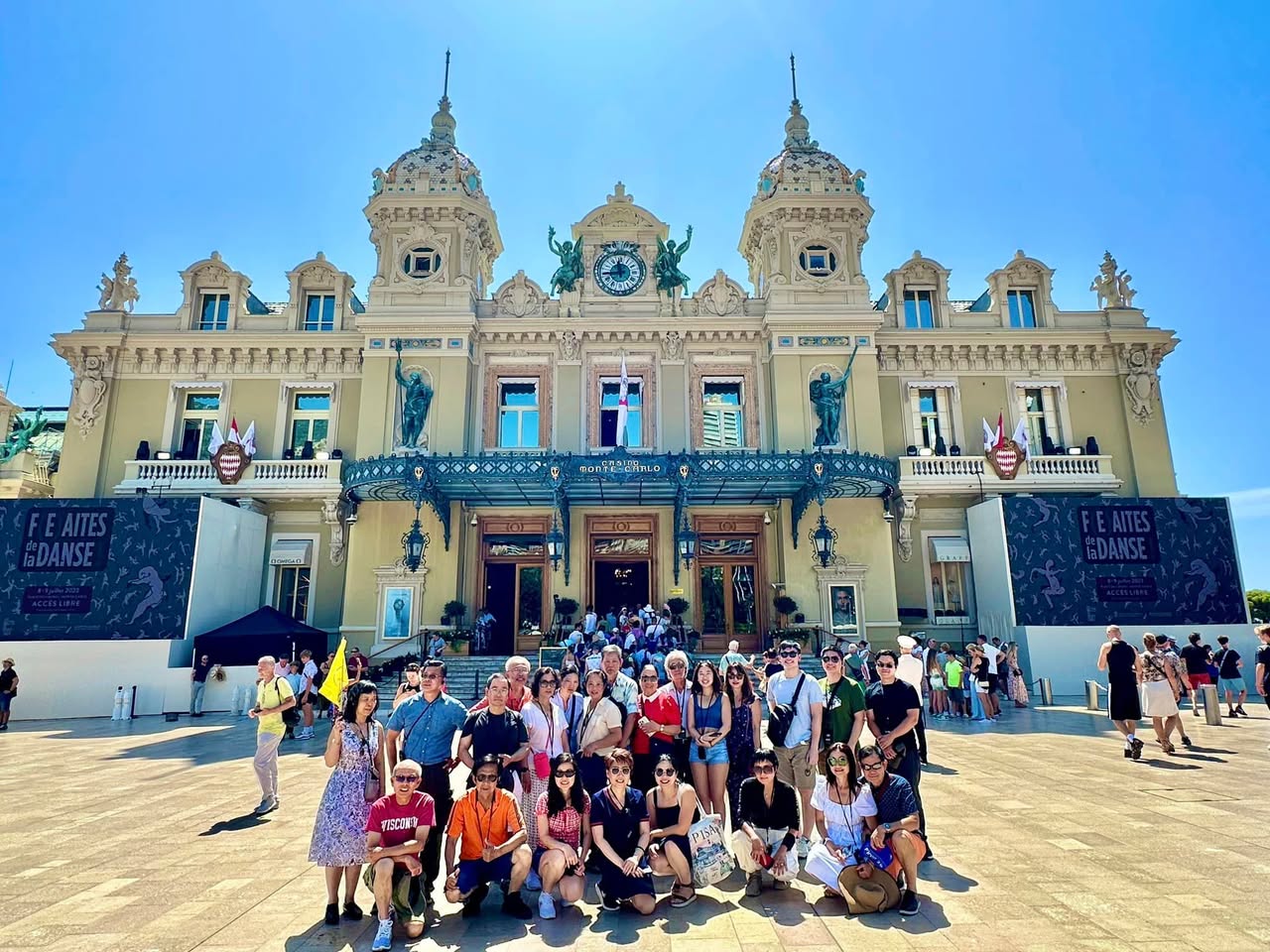
Visit Monaco (officially the Principality of Monaco). Squeezed into just 2.02 km2 (0.78 sq mi), it might follow the Vatican to be the world’s second-smallest country. Monaco is associated with the American actress Grace Kelly who became Princess of Monaco after marrying Prince Rainier III. Monte-Carlo, the major district of Monaco, is home to a neo-classical casino complex and the ornate Salle Garnier opera house. It also has many luxe hotels, boutiques, nightclubs and restaurants. The casino building, open to visitors every morning, is Europe’s most lavish example of belle-epoque architecture. Enjoying a cup of coffee while watching passers-by is another option that can be done at the Le Cafe de Paris restaurant right next to the casino.
Visit Èze, perched high on a hill above the Mediterranean between Nice and Monaco, Èze is a picturesque medieval village known for its narrow stone streets, charming houses, and breathtaking sea views. The village is also famous for its long tradition of perfume making, home to renowned perfume houses such as Fragonard, where visitors can learn about the art of fragrance creation inspired by Mediterranean flowers and herbs. Surrounded by Mediterranean aromatic plants—including lavender, thyme, and rosemary—Èze offers a natural connection to the fragrant landscapes of Provence, making it a charming gateway to the region’s celebrated lavender culture.
Overnight in Nice. (B/D)
Transfer to the airport for the departure flight to LAX.
The following terms apply to all AV Travel tour reservations. By making a reservation or submitting payment, travelers acknowledge that they have read and agree to AV Travel’s full Terms & Conditions.
Tour Itinerary & Pricing
Deposit & Payment Policy
Cancellation Policy
Tour Price Exclusions
The published tour fare does not include the following items:
Travel Documents
Travel Insurance
Travel Risk Acknowledgment
*For complete Terms & Conditions, including cancellation policies, supplier responsibilities, and liability limitations, please refer to AV Travel’s official Terms & Conditions. https://avtravel.com/about-us-1/